




Introduction
Slovakia Signals EU – The political landscape of Europe has entered a new phase of debate, tension, and strategic recalibration. At the heart of this shift is Slovakia, a relatively small Central European nation whose decisive stance has triggered major discussions across the European Union. Under the leadership of Prime Minister Robert Fico, Slovakia has forcefully challenged Brussels’ ongoing strategy toward Russia and its long-standing policy of military and financial assistance to Ukraine.
This sharp divergence has come at a time when the EU is striving to maintain unity amid global conflict, economic instability, and rising geopolitical competition. Slovakia’s refusal to back additional financial aid packages and sanctions, along with warnings against prolonging the war, represents one of the boldest dissenting voices within the bloc.
What makes Slovakia’s stance even more significant is not merely the content of its argument, but the courage with which it is delivered. In a geopolitical setting often dominated by larger nations, Slovakia’s voice now rings louder than ever. This article explores the origins, implications, and potential outcomes of Slovakia’s challenge to EU policy — offering deep analysis, political context, and a balanced view of the evolving narrative.
Slovakia Signals EU
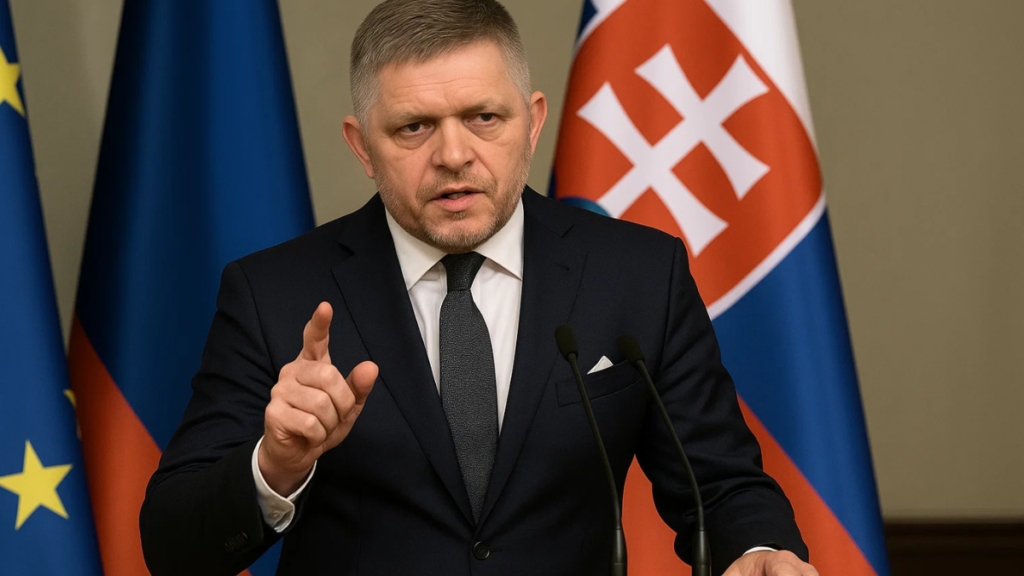
Slovakia Signals EU : HIGHLIGHT TABLE
| Key Issue | Slovakia’s Position | Impact on EU |
|---|---|---|
| Russia Strategy | Calls for reassessment; views current approach as counterproductive | Sparks debate within EU leadership |
| Ukraine Aid | Opposes further military/financial support | Complicates EU unanimous decisions |
| Sanctions | Rejects new sanctions on Russia | Slows EU sanction packages |
| Frozen Russian Assets | Opposes using these assets to fund Ukraine | Blocks policy proposals |
1. Slovakia’s Bold Divergence From EU Mainstream
Slovakia’s political leadership has long held nuanced positions regarding Eastern Europe, but the recent shift marks a decisive break from EU consensus. For years, the EU has taken a firm stance against Russia’s aggression in Ukraine, emphasizing united support for Kyiv through weapons, humanitarian aid, and financial assistance. Slovakia, however, has increasingly voiced doubts about whether this approach is achieving its stated goals.
Prime Minister Robert Fico has repeatedly argued that the EU’s strategy risks dragging Europe into deeper instability. From Bratislava’s perspective, the war has transformed into a long, exhausting conflict with no clear end in sight. Fico believes the continuous flow of weapons to Ukraine may escalate tensions without producing a durable peace. His argument is not rooted in admiration for Russia but in skepticism about Europe’s geopolitical calculations.
This divergence raises important questions: Should the EU double down on its current direction, or should it pause and reassess its long-term objectives? Slovakia’s position insists on the latter.
2. Why Slovakia Says the EU Strategy Needs a “Reality Check”
Slovakia Signals EU -According to Slovakia’s leadership, several factors necessitate a reassessment of the EU’s Russia strategy:
a. Economic Pressure on European Citizens
Sanctions have significantly hurt Russia — but they have also contributed to rising energy costs across Europe. Slovakia, heavily reliant on imported gas and oil, has experienced direct consequences. For a nation already grappling with inflation and economic uncertainty, EU policies seem out of touch with household realities.
b. Unclear Military Outcome
Slovakia argues that despite significant Western aid, Ukraine’s battlefield progress has stalled. Continuing to pump billions in support without a clear path to resolution, they argue, may only prolong suffering while draining EU resources.
c. Lack of Diplomatic Movement
Bratislava stresses that diplomatic channels have not been adequately explored. From Slovakia’s viewpoint, a military-only approach has overshadowed negotiations. Prime Minister Fico has championed the need for a ceasefire as a precursor to talks.
d. Internal EU Disunity
Slovakia also warns that forcing consensus where major disagreements exist could fracture the EU politically. True unity, they argue, requires honest reassessment — not strict adherence to previously declared positions.
3. The Ukraine Aid Controversy: Why Slovakia Says “Enough”

Slovakia’s opposition to additional Ukraine aid is rooted in several core beliefs:
1. Aid Without Limit is Unsustainable
Slovakia questions how long the EU can continue spending billions annually. The cost of reconstruction, defense, and humanitarian support accumulates rapidly, placing strain on budgets.
2. No Clear Victory Scenario
From Bratislava’s standpoint, even Ukraine’s allies acknowledge that the conflict has entered a prolonged phase. Without a path to decisive military victory, Slovakia argues that continued aid may be more symbolic than strategic.
3. Risks of Escalation
Slovakia warns that further militarization could draw Europe into direct conflict. They urge caution, emphasizing diplomacy over confrontation.
4. Domestic Political Pressures
Slovak citizens are divided on the issue. Many support Ukraine, but a growing segment fears the economic impact of prolonged involvement. Fico’s government has tapped into these anxieties.
4. Slovakia’s Veto Power: How One Nation Can Slow the EU
The EU requires unanimous approval for many foreign policy decisions. This structure allows smaller nations like Slovakia to wield significant influence. When Slovakia vetoes sanctions or blocks proposals to use frozen Russian assets, it forces Brussels to reconsider or revise policies.
Some EU leaders view Slovakia’s stance as obstructionist. Others acknowledge that dissent is a sign of healthy debate within a democratic union. Regardless, Slovakia’s position has undeniably reshaped the pace and direction of EU decision-making.
5. Europe’s Reaction: Support, Criticism, and Quiet Agreement
a. Strong Critics
Countries like Poland, the Baltic States, and Germany, which strongly support Ukraine, argue that slowing aid endangers European security. They accuse Slovakia of undermining collective defense and empowering Russia.
b. Cautious Voices
Some EU members privately share Slovakia’s concerns but hesitate to voice them publicly. Nations struggling economically worry about the rising cost of aid but fear being labeled pro-Russian.
c. Support from Hungary
Hungary, which often clashes with Brussels, aligns closely with Slovakia. The partnership between Budapest and Bratislava is emerging as a powerful counter-voice in EU geopolitics.
6. The Debate Over Frozen Russian Assets
One of the EU’s most controversial proposals involves using frozen Russian central bank assets to finance Ukraine’s future reconstruction and military needs. Slovakia vehemently rejects this idea.
Why?
- Legal uncertainty: The use of sovereign assets may violate international law.
- Economic risks: Retaliation from Russia could target nations dependent on trade.
- Precedent concerns: Slippery slope worries about future asset seizures.
Slovakia insists that the EU must remain within legal and ethical boundaries, even in wartime.
7. Slovakia’s Call for Peace Talks: Pragmatic or Unrealistic?
Slovakia Signals EU – A major pillar of Slovakia’s argument is the urgent need for negotiations. But this view receives mixed reactions.
Arguments supporting peace talks:
- A negotiated settlement could prevent further loss of life.
- Wars typically end through diplomacy, not total victory.
- Prolonged conflict increases global instability.
Arguments against peace talks now:
- Kyiv argues that negotiations would solidify territorial losses.
- Russia may use talks to regroup militarily.
- Premature diplomacy could undermine Ukraine’s sovereignty.
Slovakia acknowledges these concerns but insists that dialogue must begin at some point — preferably sooner than later(Slovakia Signals EU).
8. Impact on the EU’s Reputation and Global Decisions
Slovakia’s resistance highlights deeper fractures in the EU’s geopolitical identity. If the bloc cannot maintain unity on major security issues, external powers may question Europe’s influence.
Yet, Slovakia argues that forced unity without practical outcomes is worse than honest division.
This debate will shape Europe’s future role in:
- NATO strategy
- Transatlantic relations
- Energy policy
- Eastern European diplomacy
9. Broader Geopolitical Implications
Slovakia’s stance may embolden other nations to challenge EU orthodoxy. It demonstrates that smaller nations can shape continental policy, especially during global crisis moments.
Meanwhile, Russia may view EU divisions as a strategic opportunity. Conversely, Ukraine sees Slovakia’s position as a potential setback in its fight for sovereignty.
The coming months will reveal whether Slovakia remains isolated — or becomes the voice of a growing European shift.
Also Read: https://trendnewspulse.com/goa-nightclub-fire/
Slovakia Signals EU : Conclusion
Slovakia Signals EU – Slovakia’s warning to the European Union marks a defining moment in the bloc’s geopolitical journey. By urging the EU to reassess its Russia strategy and opposing additional support to Ukraine, Slovakia has opened a conversation many leaders quietly feared but publicly avoided. Whether one agrees with Bratislava or not, its stance forces Europe to confront difficult questions: How long can the war continue? What is the real cost of ongoing aid? And is the current strategy bringing the continent closer to peace or pushing it deeper into conflict?
As debates continue, Slovakia’s voice will remain central. It challenges the EU to balance solidarity with realism, ideals with strategic limitations, and unity with diverse national interests. The future of Europe’s approach to the Russian-Ukrainian conflict may well depend on how Brussels responds to this bold call for reassessment.
FAQs
1. Why is Slovakia challenging the EU’s Russia strategy?
Slovakia believes the EU’s current approach is ineffective, overly costly, and risks prolonging the war without a clear resolution.
2. Is Slovakia supporting Russia?
No. Slovakia is not supporting Russia; it is advocating for diplomatic solutions over military escalation.
3. What does Slovakia want the EU to change?
Slovakia wants the EU to reassess sanctions, rethink military aid, and prioritize diplomacy.
4. Why does Slovakia oppose further aid to Ukraine?
It argues that ongoing aid is unsustainable, lacks measurable progress, and may escalate the conflict.
5. How does Slovakia’s veto affect EU decisions?
The EU requires unanimity for many policies; Slovakia’s veto can block sanctions and major aid proposals.
6. What is Slovakia’s stance on frozen Russian assets?
Slovakia opposes using them for Ukraine due to legal risks and possible retaliation.
7. Are other EU nations supporting Slovakia’s position?
Hungary strongly supports it; other nations quietly share concerns but hesitate publicly.
8. What could be the long-term impact of Slovakia’s position?
It may reshape EU foreign policy debates, encourage other dissenting voices, and influence long-term European strategy.

I’m a professional news publisher and passionate blogger, sharing trending stories, breaking news, and digital culture from around the world.