










Introduction
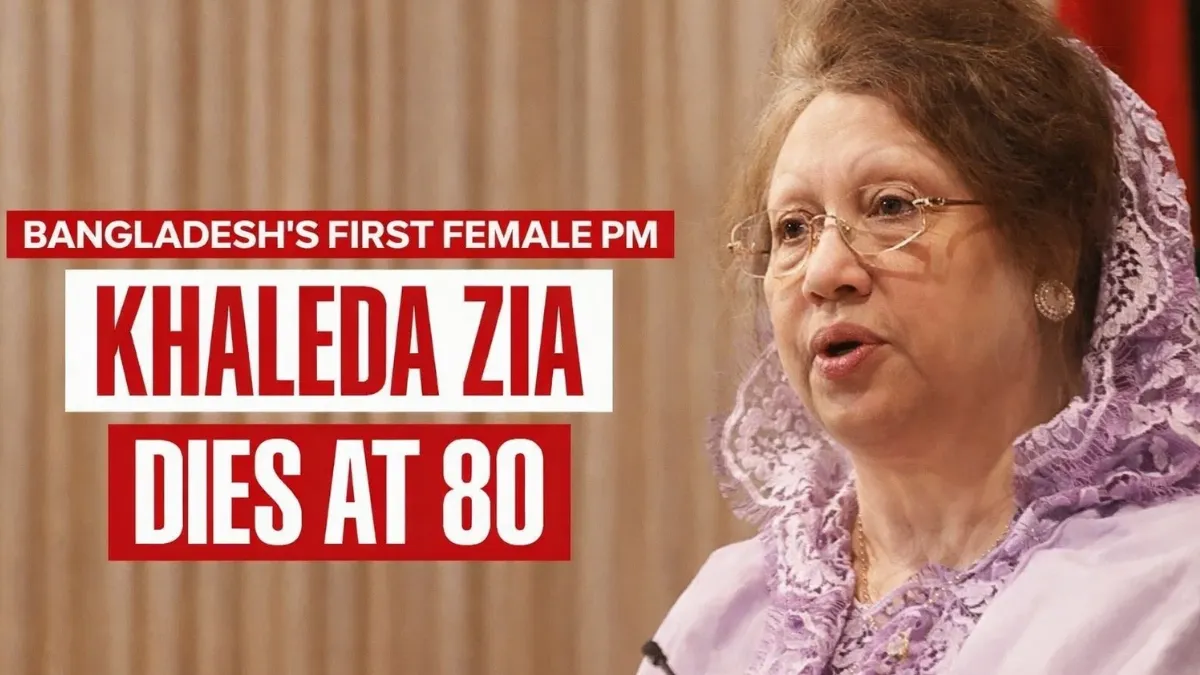
Khaleda Zia– Begum Khaleda Zia, a towering yet controversial figure in Bangladesh’s political history, died on 30 December 2025 at the age of 80 after a prolonged illness, bringing to a close a life marked by historic achievements, fierce political rivalries, and enduring influence on the nation’s political landscape. Her passing not only marks the end of an era for the Bangladesh Nationalist Party (BNP) and its supporters but also underscores the complex evolution of Bangladeshi democracy over the past four decades.
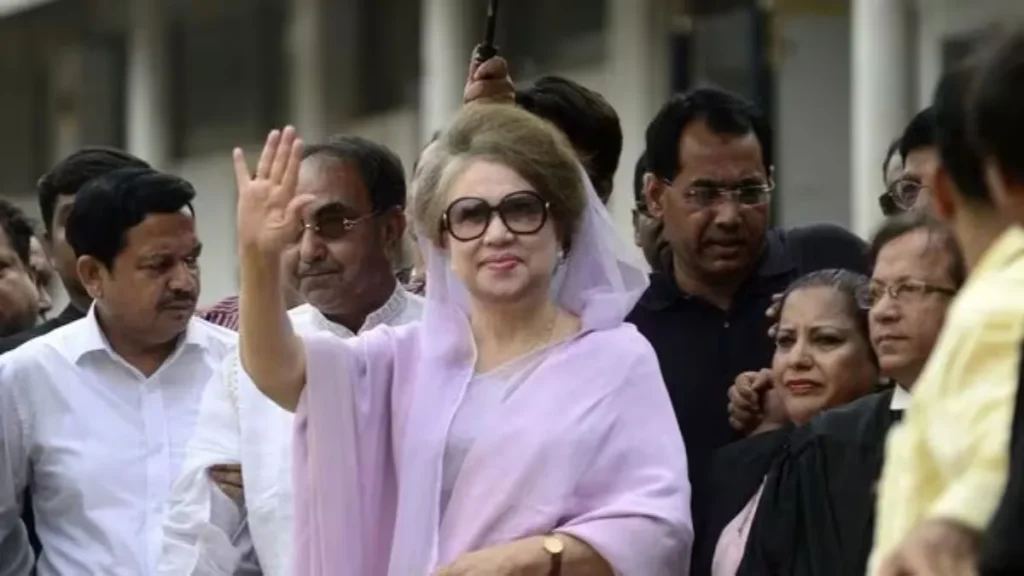
Khaleda Zia’s journey from political spouse to head of government is inseparable from the history of modern Bangladesh itself. Rising to power in a turbulent post-liberation era, she became the first woman to lead Bangladesh and the second woman in the Muslim world to head a democratically elected government, after Pakistan’s Benazir Bhutto. Her life was defined by triumphs and controversies, public devotion and private pain, and an enduring rivalry with Sheikh Hasina that shaped Bangladeshi politics for a generation.
Early Life and Background
Begum Khaleda Zia was born Khaleda Khanam Putul on 15 August 1945 in Jalpaiguri, British India, now part of West Bengal, India. After the partition of British India in 1947, her family moved to what became East Pakistan and later, after 1971, Bangladesh. From a relatively private family background, she was raised alongside her siblings and received a typical academic upbringing for a young woman of her time.
In her youth, Khaleda married Ziaur Rahman, an army officer who would become one of Bangladesh’s most consequential leaders. Ziaur Rahman’s role in the nation’s 1971 Liberation War and his later tenure as president of Bangladesh propelled the couple into the heart of the country’s political sphere. Their marriage was not merely personal but became a defining axis of her political identity.
From Wife to Political Leader
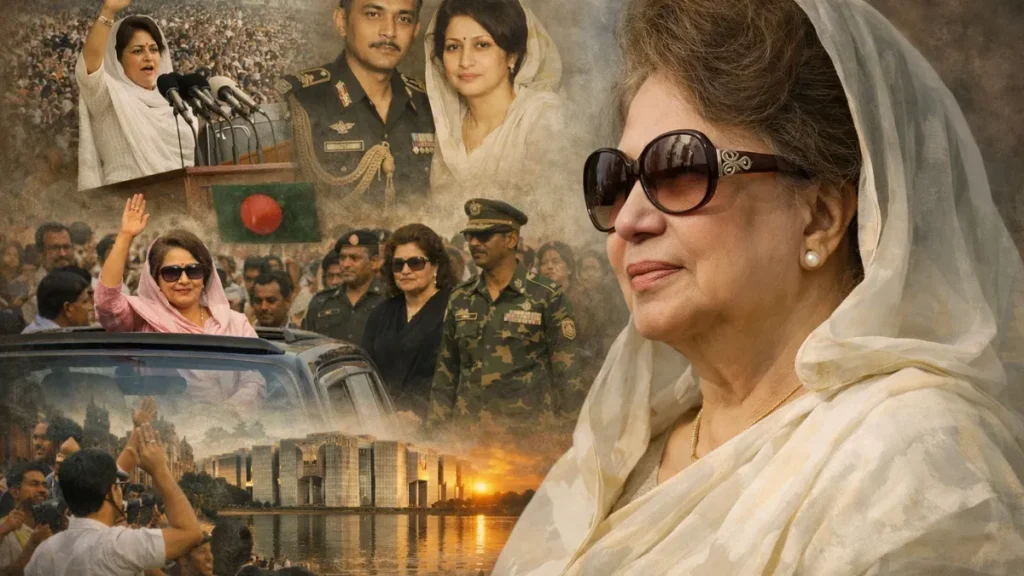
Khaleda Zia was not initially involved in active politics. For many years, she focused on raising her family — two sons, Tarique Rahman and Arafat Rahman — and caring for her home. Everything changed in 1981 when President Ziaur Rahman was assassinated during an attempted army coup. His violent death permanently altered the political trajectory of Khaleda Zia’s life.
In the wake of her husband’s death, supporters of the recently founded Bangladesh Nationalist Party (BNP) rallied around Khaleda. In 1984, she was elected chairperson of the BNP, succeeding her late husband. Her leadership came at a time when Bangladesh was under a military-backed dictatorship led by Hussain Muhammad Ershad, and the BNP was one of the principal voices calling for the restoration of democratic rule.
Despite repeated arrests, detentions, and political setbacks under the oppressive regime of the 1980s, Khaleda’s perseverance helped keep the BNP alive as a force for democratic change. Her repeated detentions, far from dimming her influence, only deepened support among many Bangladeshis who saw in her the face of resistance against autocratic rule.
Historic Election Victory and First Term (1991–1996)
The turning point for Khaleda Zia and the BNP came with the 1991 general election, which followed mass uprisings and the resignation of military ruler Ershad. Free and fair elections ushered in a new democratic era for Bangladesh, and in a stunning victory, the BNP-led alliance defeated the Awami League. **Khaleda Zia became the first female Prime Minister of Bangladesh — a milestone not only for the nation, but for Muslim-majority countries around the world.
Her first term in office was historic and set the tone for her future political career. Zia moved to overhaul Bangladesh’s political system, steering the country away from a strong presidential model to a parliamentary democracy, where the Prime Minister holds executive authority. She also pursued reforms aimed at stimulating foreign investment, promoting education, and strengthening economic development.
Her government introduced a range of social policies, such as free and compulsory primary education, and stipends and information support for girl students, reflecting an emphasis on expanding opportunities for youth and broadening female participation. These policies were widely lauded at home and abroad.
Yet, her first term was not without challenges. Bangladesh faced economic difficulties, natural disasters, and deeply entrenched political polarization. The rivalry with Sheikh Hasina, leader of the opposing Awami League, began during this period and would come to define decades of political contest.
Interlude and Return (1996 and 2001)
The 1996 general election saw the Awami League return to power under Sheikh Hasina, marking the first direct electoral defeat of Khaleda Zia. Her second stint as Prime Minister was brief, as political instability and opposition boycotts led to a short-lived administration. Yet, Zia’s political resilience was evident: she took the loss in stride and strengthened her party’s organizational structure for a comeback.
In 2001, the BNP — in coalition with other parties — achieved a landslide victory, and Khaleda Zia once again became Prime Minister. Her second term focused on economic development and infrastructural projects, but also faced escalating tensions with Islamist militant groups whose increased activities posed serious security and political challenges.
One of the most dramatic and tragic events of that era was a 2004 grenade attack on a rally attended by Sheikh Hasina, which killed dozens of people and injured hundreds. While direct responsibility has been fiercely disputed, the episode deepened political faultlines and soured national unity.
Her second term also drew intense scrutiny and criticism over allegations of corruption — themes that would re-emerge later in her career with serious consequences.
Downturn: Corruption Charges and Political Struggles
By 2006, political polarization and street violence had reached such extremes that an army-backed interim government took over, ending Khaleda Zia’s tenure. In the years that followed, both Khaleda Zia and Sheikh Hasina were detained in separate corruption and abuse of power cases, further amplifying political tensions and public divisions.
In 2018, Khaleda Zia, along with her party figures and aides, faced conviction in corruption cases related to foreign donations to a charity trust she had established during her second term. Zia and the BNP condemned these trials as politically motivated maneuvers designed to marginalize her from the political process. Supporters also argued that health issues — including severe cirrhosis of the liver, diabetes, arthritis, and heart and chest problems — made her imprisonment particularly harsh.
By 2020, Zia’s deteriorating health led authorities to move her from prison to house arrest on humanitarian grounds. This period marked her political influence waning but her symbolic presence remaining potent among loyalists.
Return to Public Life and Final Years
Khaleda Zia’s political revival accelerated after 2024, when a widespread student-led uprising led to the ousting of Sheikh Hasina’s government. An interim administration led by Nobel laureate Muhammad Yunus took charge, quickly releasing Zia from house arrest.
In early 2025, Bangladesh’s Supreme Court acquitted Zia and her son, Tarique Rahman, in the long-running corruption cases that had complicated their political careers. This legal vindication opened the door for renewed participation in national politics and set the stage for elections planned in February 2026 — a moment that could have seen Khaleda Zia return to the forefront of national leadership even in her advanced age.
In November 2025, however, Zia’s health took a critical turn. She was admitted to Evercare Hospital in Dhaka with symptoms of a lung infection and complications from longstanding illnesses. Despite efforts, her condition worsened and she passed away on 30 December 2025, reportedly around 6:00 AM local time just after Fajr prayers.
Personal Life and Family
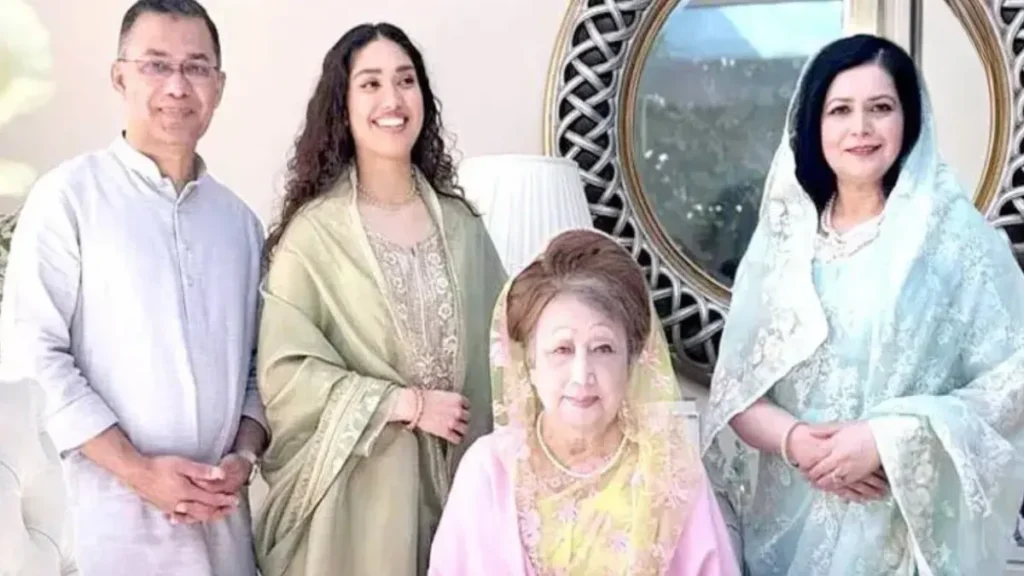
Khaleda Zia’s family life was intertwined with her political identity. Her late husband, Ziaur Rahman, was a revered military and political figure whose leadership helped define early post-independence Bangladesh and provided the foundation for the BNP. Zia’s sons also played significant roles in the party, particularly Tarique Rahman, who became the acting chairperson of the BNP and returned to Bangladesh in late 2025 after nearly 17 years in self-imposed exile.
Her personal losses — including the assassination of her husband and later health difficulties affecting her family — added a poignant layer to her public life, making her story not just one of political struggle, but also resilience in the face of personal hardship.
Legacy and National Impact
Khaleda Zia’s legacy is complex, deeply debated, and intensely felt across Bangladesh. For many supporters, she was a trailblazer — an emblem of democratic resilience and a woman who led her nation amidst patriarchal norms and geopolitical pressures. Her historic election as the first female Prime Minister broke barriers, inspired women, and reshaped perceptions of leadership in Muslim-majority countries.
Her supporters highlight her contributions to education reform and her role in restoring parliamentary democracy in the early 1990s. Her policies aimed at increasing access to education, especially for girls, have left a lasting social imprint that continues to be recognized by educators and activists alike.
Yet, critics point to the political polarization that characterized her terms, the intensification of rivalry with Sheikh Hasina that often translated into street violence and political instability, and unresolved allegations of corruption that dogged her second term and later years. They argue that such conflicts delayed economic progress and damaged democratic norms.
Even so, her role in shaping Bangladesh’s political landscape — forcing debates about accountability, leadership, and democracy — is undeniable. In a nation where political figures are often mythologized, Khaleda Zia will be remembered as one of the central architects of modern politics — for better and worse.
National and International Reactions
News of Khaleda Zia’s death has prompted widespread reaction within Bangladesh and abroad. Political leaders across parties, international governments, and global human rights advocates are issuing condolences, acknowledging her role in advancing democratic reforms while also reflecting on the deep divisions that marked her career.
Leaders globally have highlighted her historic role as a woman in power in a Muslim-majority nation and her symbolic representation of political resilience. Within Bangladesh, moments of national mourning reflect both admiration from her supporters and measured respect from opponents who recognize her significance in the country’s political evolution.
Also Read : Dense Fog Paralyzes Delhi-NCR, Nearly 200 Flights Delayed and 6 Cancelled
Conclusion
Begum Khaleda Zia’s death at 80 closes a compelling and tumultuous chapter of Bangladeshi politics. Her journey from political widowhood to becoming one of the most powerful figures in South Asia encapsulates the hopes, struggles, triumphs, and disputes of a nation striving for democratic stability.
Her legacy will be debated for generations — as a pioneering female leader, a shaper of parliamentary democracy, a polarizing rival in a two-party system, and a woman whose personal courage often stood at the very heart of Bangladesh’s political story. Scholars, politicians, citizens, and historians will continue to study and interpret her impact, ensuring that Khaleda Zia’s name remains central in any account of Bangladesh’s post-independence history.
FAQs
1. Who was Khaleda Zia?
Khaleda Zia was the first female Prime Minister of Bangladesh and the chairperson of the Bangladesh Nationalist Party (BNP).
2. When was Khaleda Zia born?
She was born on 15 August 1945.
3. When did Khaleda Zia pass away?
Khaleda Zia passed away on 30 December 2025 at the age of 80.
4. How many times did Khaleda Zia serve as Prime Minister?
She served as Prime Minister of Bangladesh twice, from 1991 to 1996 and again from 2001 to 2006.
5. Why is Khaleda Zia considered a historic leader?
She was the first woman to become Prime Minister of Bangladesh and one of the earliest female leaders in a Muslim-majority country.
6. Which political party did Khaleda Zia lead?
She led the Bangladesh Nationalist Party (BNP).
7. Who was Khaleda Zia’s husband?
Her husband was Ziaur Rahman, a former President of Bangladesh and a key figure in the country’s liberation history.
8. What were Khaleda Zia’s major contributions?
Her contributions include restoring parliamentary democracy, promoting education reforms, and strengthening democratic institutions.
9. What controversies were associated with Khaleda Zia?
She faced allegations of corruption, political rivalry with Sheikh Hasina, and periods of imprisonment and house arrest.
10. How is Khaleda Zia remembered today?
She is remembered as a pioneering female leader, a symbol of political resilience, and a central figure in Bangladesh’s modern political history.

I’m a professional news publisher and passionate blogger, sharing trending stories, breaking news, and digital culture from around the world.