










Introduction — A Landmark Moment in Indian Aviation
India has taken a groundbreaking step in aviation and infrastructure with the inauguration of its first nature-themed airport terminal at Lokpriya Gopinath Bordoloi International Airport in Guwahati, Assam. This terminal is not just a hub for domestic and international flights; it represents a fusion of culture, ecology, and innovation, setting a new benchmark for airports across the country.
The terminal spans an impressive 1.4 lakh square meters and is designed to handle over 13 million passengers annually, making it the largest airport facility in Northeast India. Its creation signals India’s commitment to inclusive development, regional connectivity, and sustainable infrastructure. More than an airport, it is envisioned as a gateway to the Northeast, reflecting the heritage, biodiversity, and spirit of Assam.
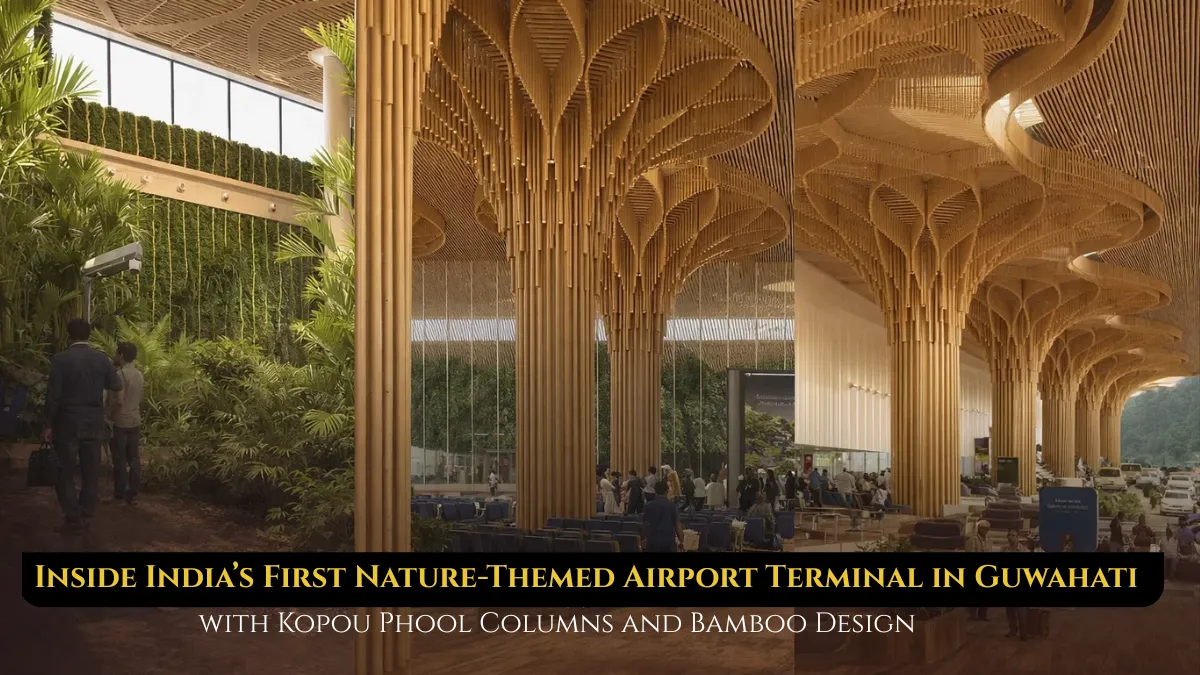
At the heart of its design are elements deeply rooted in local culture, such as Kopou flower columns, extensive bamboo structures, and motifs inspired by Kaziranga National Park and Assamese craft. Passengers experience not just travel convenience but a multi-sensory journey through the natural and cultural essence of the region.
This article explores the terminal’s architecture, design philosophy, passenger experience, sustainability features, economic impact, and strategic importance, offering a complete insight into India’s first nature-themed airport terminal.
Prime Minister Modi’s Visit — December 20, 2025, Marks a Historic Inauguration
On December 20, 2025, Prime Minister Narendra Modi visited Guwahati to inaugurate India’s first nature-themed airport terminal at the Lokpriya Gopinath Bordoloi International Airport. This historic occasion underscored the government’s focus on modern infrastructure, regional development, and cultural preservation. During his visit, PM Modi highlighted how the terminal strengthens connectivity, boosts tourism, and sets a global benchmark in sustainable airport design.
He praised the innovative integration of bamboo structures, Kopou flower-inspired columns, and the indoor Sky Forest, emphasizing that the airport reflects both Assam’s rich heritage and India’s commitment to eco-friendly infrastructure. The Prime Minister also noted that the terminal will facilitate economic growth, create employment, and position Guwahati as a key gateway to Northeast India and Southeast Asia, making it a strategic asset for both domestic and international travel.
PM Modi’s visit not only marked the official opening of the terminal but also served as a symbolic endorsement of Northeast India’s rising prominence in the country’s development and tourism roadmap.
1. Vision and Cultural Context
Celebrating Assam’s Identity
The terminal’s design is anchored in Assamese culture and Northeast heritage. The architectural concept integrates:
- Kopou Flower Columns: These 57 sculptural columns are inspired by the foxtail orchid, a revered symbol in Assamese culture. They rise elegantly through the concourses, merging functionality with cultural storytelling.
- Bamboo Structures: Approximately 140 metric tonnes of locally sourced bamboo are used in structural and decorative elements, representing both sustainability and cultural heritage.
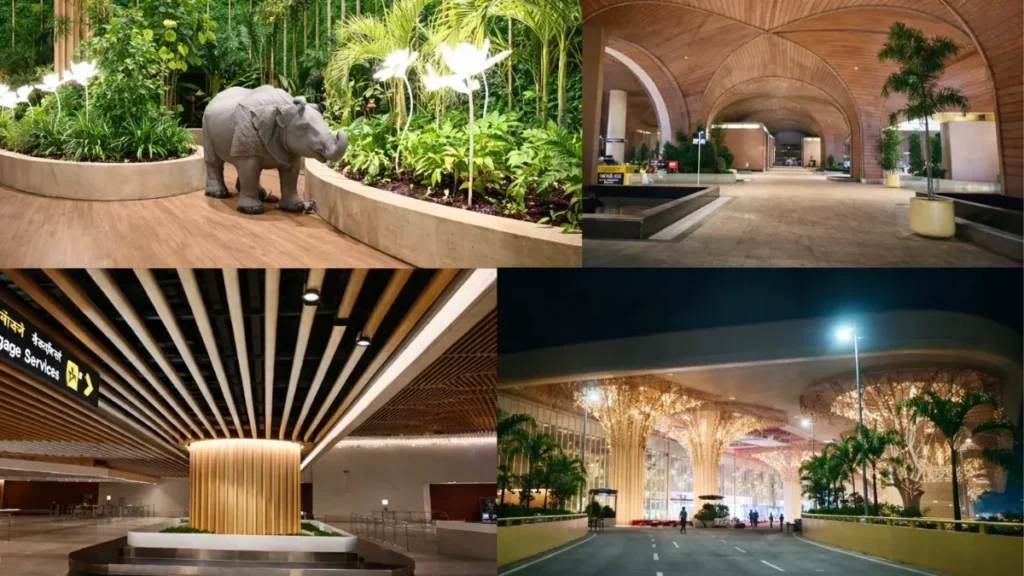
- Wildlife Motifs: Design elements reference Kaziranga’s one-horned rhinos, highlighting the state’s biodiversity.
- Traditional Crafts: Motifs of Assamese hats (Japi) and other local patterns are woven into the interiors, showcasing regional artistry.
This fusion of art, tradition, and architecture ensures that the airport is not merely functional but an immersive representation of the Northeast’s identity.
2. Architecture and Design — Nature Meets Modern Engineering

Sky Forest — Bringing Nature Inside
A standout feature of the terminal is the Sky Forest, an indoor green space housing over 100,000 indigenous plants. This forest-like area improves air quality, creates a calming environment, and allows passengers to experience Assam’s natural beauty while traveling. The Sky Forest serves as a micro-ecosystem, blending aesthetics with environmental functionality.
Bamboo Vaults and Structural Innovation
The terminal’s bamboo vaults are both structurally sound and visually striking, providing natural aesthetics while supporting the roof and open spaces. Bamboo, known for its flexibility and strength, is used in corridors, lounges, and ceiling vaults, integrating sustainability with innovative design.
Orchid-Inspired Columns
The orchid-shaped columns act as vertical art installations and functional supports. Their design mimics natural stalks and creates spatial rhythm across concourses, guiding passenger flow while evoking Assam’s flora.
3. Passenger Experience — Comfort, Technology, and Immersion
Enhanced Capacity and Connectivity
The terminal increases passenger handling capacity dramatically, supporting the Northeast’s growing air traffic and enhancing connectivity with domestic and international destinations. It serves as a hub connecting the region to Southeast Asia and other global locations.

Digital Integration
The terminal incorporates state-of-the-art digital technologies:
- Contactless Travel: Facial recognition and touchless check-in for seamless passenger movement.
- Automated Baggage Handling: Streamlined processes ensure efficiency and security.
- AI-Driven Operations: Real-time monitoring of crowd flow, flight scheduling, and operational analytics.
- Advanced Security Screening: Full-body scanners and modern detection systems enhance safety and convenience.
Amenities and Comfort
Passengers benefit from spacious lounges, indoor greenery, cultural showcases, and intuitive wayfinding systems. These features ensure a stress-free and engaging travel experience, setting a new benchmark for airports in India.
4. Sustainability — An Eco-Conscious Approach
Eco-Friendly Materials
The terminal prominently features locally sourced bamboo, a renewable material, reducing carbon footprint and emphasizing regional craftsmanship.
Indigenous Plant Ecosystems
The Sky Forest and other green zones act as living air filters, regulating temperature and enhancing indoor air quality, reducing reliance on mechanical ventilation.
Energy Efficiency
Natural lighting, passive ventilation, and careful orientation minimize energy consumption. Large skylights provide daylight, reducing the need for artificial lighting during the day.
Landscape Integration
Green landscapes outside the terminal extend the ecological theme, creating a continuity between built and natural environments and supporting local biodiversity.
5. Economic and Regional Impact
Boosting Northeast Connectivity
The terminal transforms Guwahati into a strategic aviation hub, enhancing trade, tourism, and regional development. It aligns with national policies to strengthen the Northeast’s economic and cultural integration.
Employment Generation
Construction and operations have created thousands of jobs in aviation, hospitality, retail, and maintenance, supporting local economies.
Tourism and Cultural Promotion
The terminal itself acts as a cultural attraction, immersing visitors in Assam’s natural beauty and heritage, encouraging tourism and cultural engagement.
6. Strategic Importance
National Connectivity
The terminal enhances air travel efficiency for the entire region, reducing travel time and improving access to remote Northeastern states.
Aviation Diplomacy
Airports are gateways to a country’s culture and capability. This nature-themed terminal showcases India’s cultural depth, environmental commitment, and modernization, projecting soft power to global visitors.
7. Challenges and Future Outlook
Maintenance of Green Spaces
Ensuring the health of indoor plants and bamboo structures in a high-traffic environment requires careful planning and ongoing maintenance.
Balancing Tradition with Modern Regulations
Integrating traditional materials like bamboo while meeting modern safety and building codes presents engineering challenges.
Sustainability at Scale
As passenger numbers increase, maintaining energy efficiency and eco-friendly operations will require innovative strategies and monitoring.
Despite challenges, the project represents a benchmark for eco-conscious, culturally rooted infrastructure, inspiring future developments in India and globally.
8. Public Reactions and Reception
Travelers and locals have praised the terminal for its aesthetic beauty, cultural resonance, and modern facilities. Experts highlight it as a new standard in airport design, blending functionality, sustainability, and regional identity seamlessly.
Also Read: Renowned Malayalam Actor-Director Sreenivasan Dies at Age 69
Conclusion — A Visionary Landmark
India’s first nature-themed airport terminal in Guwahati is more than infrastructure — it is a symbol of innovation, cultural pride, and environmental stewardship. It demonstrates how modern architecture can honor heritage, serve travelers efficiently, and embrace sustainability.
As passengers arrive and depart, the terminal will serve as a living gateway to Assam, showcasing the region’s natural beauty, cultural richness, and India’s forward-thinking vision for infrastructure.
This terminal exemplifies a future where airports are not just transit points but spaces of experience, learning, and inspiration — a milestone in Indian and global aviation.
Frequently Asked Questions (FAQs)
1. What makes Guwahati’s new airport terminal unique?
It is India’s first nature-themed terminal, integrating bamboo, orchid-inspired columns, and green spaces with modern aviation technology.
2. What is the annual capacity of the terminal?
The terminal can handle over 13 million passengers per year, significantly increasing Northeast India’s air travel capacity.
3. How does the terminal support sustainability?
Through bamboo structures, indigenous plant ecosystems, passive design, and energy-efficient systems.
4. What cultural elements are featured?
Kopou flower columns, Japi motifs, wildlife references, and bamboo designs reflect Assamese heritage.
5. How does the terminal enhance passenger experience?
With digital systems, contactless travel, automated baggage handling, green spaces, and spacious lounges for comfort.

I’m a professional news publisher and passionate blogger, sharing trending stories, breaking news, and digital culture from around the world.