







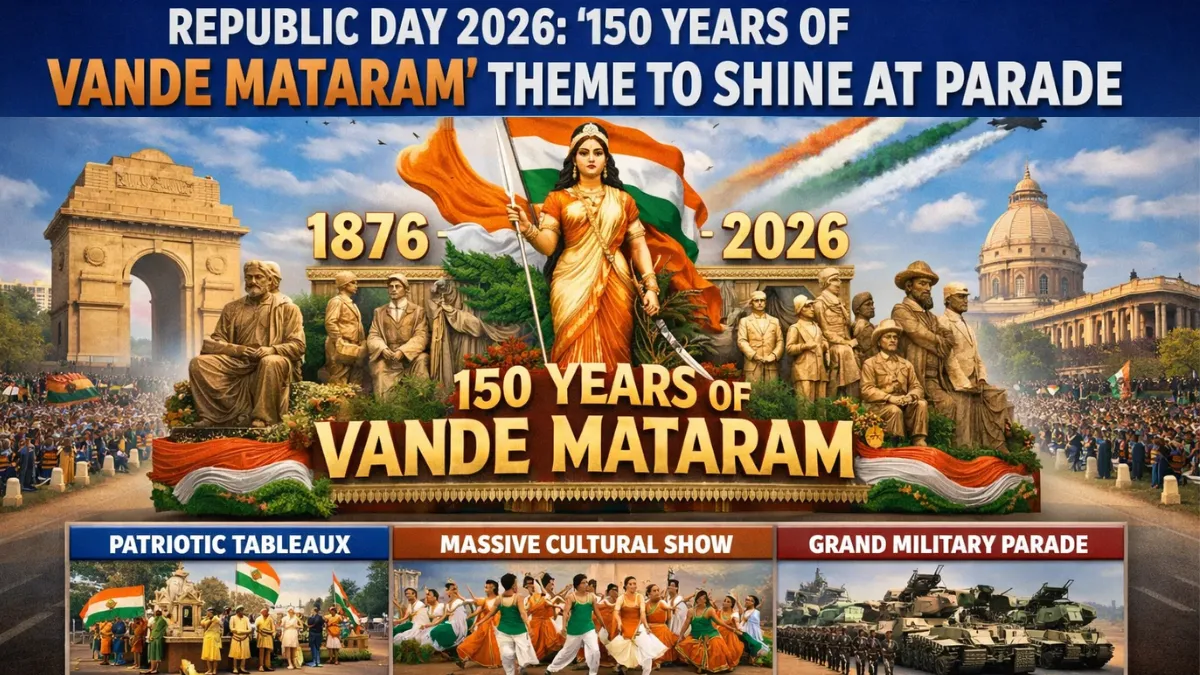
Republic Day 2026-India’s Republic Day is not just a national holiday — it is an embodiment of the country’s proud democratic legacy, cultural diversity, military strength, and artistic heritage. Every year on January 26, the nation celebrates the day its Constitution came into force in 1950, marking the birth of the Republic of India. The 77th Republic Day in 2026, however, has a distinctive and deeply symbolic theme: “150 Years of Vande Mataram” — paying homage to the iconic national song that has stirred patriotism across generations.
This year’s celebrations are historic, emotional, and rich in symbolism — blending India’s freedom struggle with its vision for the future. This detailed article takes you through the history, preparations, themes, parade elements, tableaux highlights, performances, honours, and what spectators can expect on this monumental day.
1. The Significance of Republic Day
1.1 What is Republic Day?
Republic Day commemorates January 26, 1950, when the Constitution of India came into effect, marking India as a sovereign, democratic republic. While Independence Day (August 15) celebrates freedom from colonial rule, Republic Day celebrates India’s own Constitution and democratic foundation. It honors the vision of nation-builders who framed the Constitution, embedding ideals of justice, liberty, equality, and fraternity.
Traditionally, the celebrations include:
- The Republic Day Parade at Kartavya Path, New Delhi
- Tableaux from states and ministries
- Cultural performances
- Military bands and marching contingents
- Flypasts by Air Force jets
- Awards including Gallantry medals, Padma honours, and more
Every aspect reflects India’s unity in diversity and its profile on the global stage.
1.2 Why 2026 Has a Special Theme
Republic Day 2026 is more than an annual celebration — it symbolically incorporates the 150th anniversary of Vande Mataram, a song that became one of the emotional pillars of India’s freedom movement. Composed by Bankim Chandra Chattopadhyay in 1875, the song was popularized as a rallying cry against colonial domination and has since become a cultural treasure, closely linked with patriotic expression.
2. “150 Years of Vande Mataram”: The Overarching Theme

2.1 Why Vande Mataram Matters
“Vande Mataram” (meaning “I bow to thee, Mother”) is much more than a song — it is an emblem of Indian pride, sacrifice, and unity. It inspired freedom fighters, resonated in prison walls and protest marches, and became an anthem for courage and collective aspiration.
For 2026, the government chose this theme intentionally:
- To honor the sesquicentennial (150 years) anniversary of the song’s creation
- To salute its historic impact on India’s freedom struggle
- To bring modern India together through a shared symbol of unity and identity
This theme is woven into nearly every aspect of the Republic Day celebrations — from the parade route décor to the performances and tableaux.
2.2 How the Theme Is Visually Presented
Along the Kartavya Path — formerly Rajpath — a series of paintings by Tejendra Kumar Mitra (published in 1923) illustrating the verses of Vande Mataram will be displayed as view-cutters (decorative scenic panels). These paintings will act as a visual narrative of the song’s profound emotions and allegories, enhancing the parade experience for viewers.
Additionally:
- Floral decorations at the main dais will echo the song’s spirit
- Invitation cards and parade tickets carry the sesquicentenary logo
- A banner themed around Vande Mataram will be released with balloons at the parade’s conclusion — a moment designed to stir patriotic sentiment among attendees and viewers alike.
3. The Venue: Kartavya Path, New Delhi
The Republic Day Parade 2026 will take place on Kartavya Path in New Delhi — India’s principal ceremonial boulevard. It stretches from India Gate to the Rashtrapati Bhavan, forming the heart of India’s national celebrations.
The parade typically begins in the morning with a ceremonial march-past, performances, and concludes with an impressive aerial display by the Indian Air Force, leaving spectators with a memorable experience.
4. Chief Guests and Global Significance
For Republic Day 2026, India extended its hospitality to two distinguished European dignitaries:
- Ursula von der Leyen, President of the European Commission
- Antonio Costa, President of the European Council
Their presence underscores India’s diplomatic relations with Europe and reflects the importance of the occasion on the international stage.
5. Pre-Parade Activities and Pan-India Engagement
5.1 Band Performances Across the Country
Republic Day spirit starts well before January 26. From January 19 to 26, military and paramilitary band performances themed around Vande Mataram are being showcased in over 120 cities and 235 locations nationwide. These performances include bands from:
- The Indian Army
- The Indian Navy
- The Indian Air Force
- The Indian Coast Guard
- Other Central Armed Police Forces
These musical events celebrate the patriotic theme and bridge the national experience between the capital and the country at large.
5.2 Public Participation and Competitions
In the run-up to Republic Day, numerous competitions were held to promote awareness and engagement with the Vande Mataram theme. Organized on platforms like:
- MyGov
- MyBharat
These competitions included creative events such as essay writing, quizzes, singing, and painting, focusing on the themes of Vande Mataram and Aatmanirbhar Bharat. Thousands participated — not just for prizes but to connect with a shared cultural heritage.
6. The Parade Itself: What to Expect
Republic Day 2026 promises a multi-layered experience — weaving tradition, military precision, cultural diversity, and technological presenting into a single grand spectacle.
6.1 The March-Past
The parade’s march-past segment will feature:
- Military contingents, including infantry regiments, paramilitary units, and state forces
- Police and central armed police contingents
- Mounted contingents with display of horses
Each contingent is known for impeccable drill, synchronized movements, and disciplined precision attesting to India’s security forces’ strength.
6.2 Battlefield Battle Array and Technological Showcases
The Republic Day Parade often showcases India’s military evolving capabilities, and this year is no exception. Highlights include:
- T-90 tanks
- Arjun Main Battle Tanks
- BrahMos missiles
- Akash and MRSAM (Medium Range Surface-to-Air Missiles) systems
- Drones and unmanned vehicles
- Showcasing innovative technologies like Drone Shakti and Shaktibaan
- The advanced S-400 air defence system marking a first for the Department of Military Affairs tableau.
7. Tableaux: The Heart of the Republic Day Story
Perhaps the most visually captivating and historically rich elements of the Republic Day Parade are the tableaux — elaborate floats representing states, ministries, and institutions, which convey stories of culture, history, progress, and aspiration.
7.1 Overview of Tableau Themes
In 2026, a total of 30 tableaux will move down the Kartavya Path:
- 17 from States and Union Territories
- 13 from Ministries and Departments
These tableaux are designed around two sub-themes:
- Swatantrata ka Mantra — Vande Mataram (The Mantra of Freedom)
- Samriddhi ka Mantra — Aatmanirbhar Bharat (The Mantra of Prosperity)
Together they represent India’s historic struggle and future-ready vision.
7.2 Notable State Tableaux
Here are some highlights from state displays:
Assam
- Theme: Asharikandi — Terracotta Craft Village of Assam
Celebrating the artisanal tradition and craftsmanship that form the cultural backbone of Assam.
Chhattisgarh
- The Mantra of Freedom — Vande Mataram
The tableau highlights tribal freedom fighters and the state’s heritage, such as its first digital museum dedicated to tribal heroes.
Gujarat
- Mantra of Swadeshi — Self-Reliance — Freedom: Vande Mataram
Showcasing the spirit of self-reliance, freedom struggle, and economic growth.
Kerala
- Water Metro & 100% Digital Literacy
Representing modern achievements in infrastructure and education.
Maharashtra
- Ganeshotsav
Highlighting cultural celebration and communal harmony.
Nagaland
- Hornbill Festival — Celebrating Culture, Tourism & Self-Reliance
Bringing tribal heritage and tourism-rich culture of the North East to national spotlight.
Tamil Nadu
- Mantra of Prosperity
Depicting traditions aligned with future development.
7.3 Ministry and Service Tableaux
Central government ministries showcase India’s institutional achievements:
- Ministry of Culture: “Vande Mataram — The Soul Cry of a Nation”
This float embodies the emotional core of the parade’s central theme. - Ministry of Information & Broadcasting: Bharat Katha
Celebrating storytelling and media’s role in shaping nationhood. - Department of Military Affairs: Displays military achievements and Operation Sindoor victory.
8. Cultural Performances and Artistic Showcase
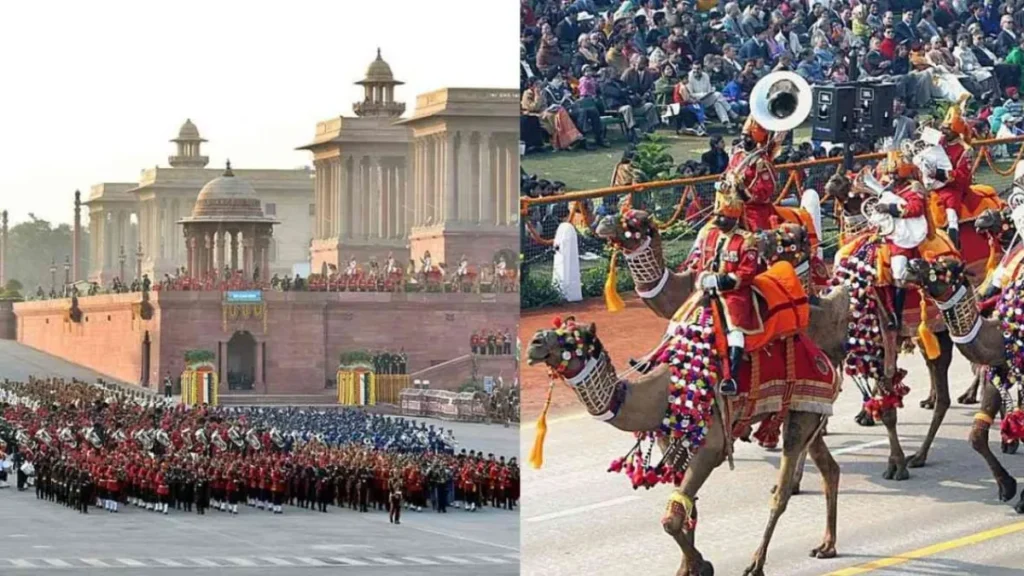
Performances are an integral part of the Republic Day parade, blending classical and folk traditions from across the country:
- Classical dance ensembles — from Bharatanatyam to Kathak
- Folk dances representing diverse regions
- Student groups performing thematic pieces aligned with freedom struggle and national spirit
- A large ensemble of artists (about 2,500) performing under artistic direction coordinated by renowned professionals including composers, choreographers, and narrators.
9. The Aerial Spectacle
At the conclusion of the parade, a synchronized flypast by aircraft of the Indian Air Force adds grandeur:
- Fighter jets such as Rafale and Su-30
- Helicopters such as Apache and LCH
- Transport aircraft through precision formations
This aerial display is a crowd favourite, ending the day on a high patriotic note.
10. Inclusion and Special Honourees
A noteworthy aspect of Republic Day 2026 is its inclusive guest list. Around 10,000 special guests representing:
- World Para Athletics winners
- Farmers practicing natural farming
- Rehabilitated persons under social schemes
- Scientists and technologists from major ISRO missions
- Leaders from green hydrogen and other emerging industries
These individuals symbolize the diversity of India’s achievements and contributions to nation-building.
Also Read: Trump Drops Threat on Greenland but Still Pushes Golden Dome and Critical Mineral Ambitions
11. Conclusion: A Celebration of India’s Past and Future
Republic Day 2026 is more than a parade. It is a national narrative — connecting India’s freedom legacy, captured in Vande Mataram, with its aspirations for progress, self-reliance, and unity. With vibrant tableaux, heartfelt performances, military precision, global dignitaries, and a theme that resonates deeply with millions, this Republic Day will be remembered as a milestone in India’s cultural and democratic journey.

I’m a professional news publisher and passionate blogger, sharing trending stories, breaking news, and digital culture from around the world.