










Introduction
Delhi Demolition Drive– On January 7, 2026, a major demolition drive in Old Delhi’s Turkman Gate area near the century-old Faiz-e-Elahi Mosque triggered tension, protests, and clashes between local residents and law enforcement officials. The action, carried out by the Municipal Corporation of Delhi (MCD) under a Delhi High Court order, sought to remove what authorities described as illegal or unauthorized structures adjacent to the mosque. What began as a civic enforcement operation soon escalated into a volatile situation involving stone pelting, use of tear gas, injuries to police personnel, detentions, and community unrest. The episode underscored the fraught intersection of urban governance, legal processes, community sentiments, and law and order in India’s densely populated historic quarters.
This article provides a comprehensive narrative of what happened — including why the drive was undertaken, how events unfolded, reactions from multiple stakeholders, and the wider social and political implications.

Historical and Legal Background
The Location and Its Significance
The area around Faiz-e-Elahi Mosque lies near Turkman Gate and Ramlila Ground, a historically significant and densely populated section of Old Delhi. This neighborhood has numerous heritage sites, narrow lanes, and longstanding residential and commercial activities. Over time, informal and unauthorized constructions, including shops, small businesses, banquet halls, dispensaries, and roadside encroachments, began to occupy public land around the mosque. Many of these structures were built on land that local residents had used for decades, creating complex layers of social, economic, and legal claims.
Judicial Orders and Encroachment Removal Mandate
In November 2025, the Delhi High Court issued an order directing civic authorities — including the MCD and the Public Works Department (PWD) — to clear encroachments near the Ramlila Ground and Turkman Gate area. The court’s directive gave the agencies a timeline to remove nearly 38,940 square feet of alleged encroachments on public land adjoining the mosque and surrounding areas. The order came after a public interest litigation (PIL) that pointed to widespread unauthorized occupation of government land, based on a joint survey conducted by multiple municipal and urban development agencies.
The mosque’s managing committee later filed a petition contesting the order and asserting that the land should be considered waqf property, under the Waqf Act, meaning that only a Waqf Tribunal — not civic authorities — should adjudicate ownership disputes. Despite this petition being pending before the High Court, authorities proceeded with the demolition drive following judicial directives on encroachment removal.
The Demolition Drive: Sequence of Events
Pre-Dawn Preparations
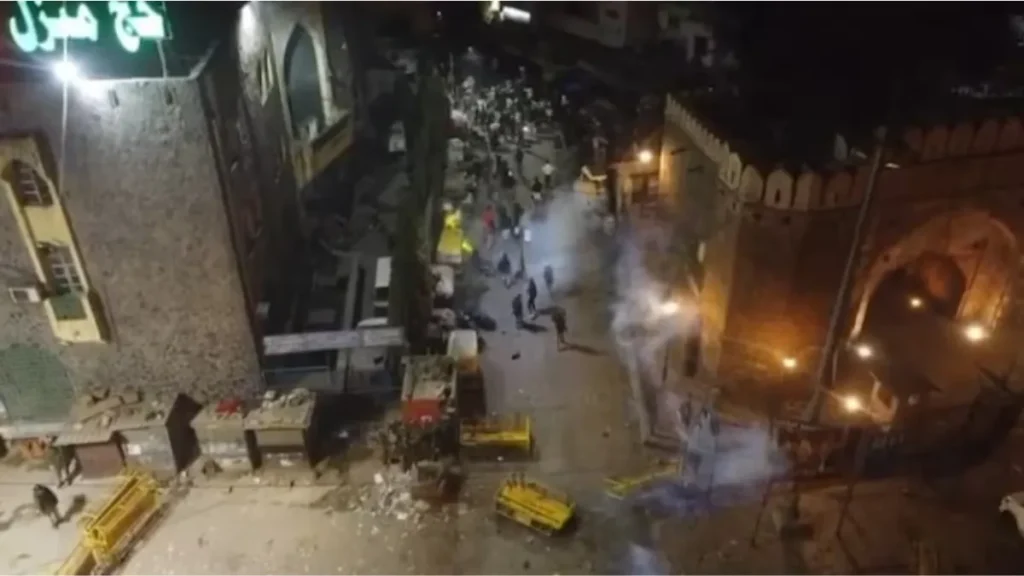
In the early hours of January 7, 2026 — around 1:00 to 1:30 AM — MCD officials mobilized for the demolition action. At least 17 bulldozers along with other heavy machinery were brought to the site to execute the court-mandated order. Police and paramilitary forces were deployed in large numbers to maintain law and order, and the entire area was strategically divided into multiple security zones. Senior police officers personally supervised the operation in critical sectors to prevent any escalation.
Local residents reported being taken by surprise as the operation began before dawn. Traffic around JLN Marg, Ajmeri Gate, Minto Road, Delhi Gate, and surrounding arteries was impacted, with authorities sealing roads and issuing advisories to commuters to avoid the area.
Demolition of Encroachments
The civic action focused on structures that had allegedly been built without legal sanction on public land adjacent to the mosque and its graveyard area. These included:
- A banquet hall
- A dispensary or diagnostic centre
- Unauthorised shops
- Portioned encroachments on footpaths, roadside areas, and community spaces
Officials consistently stated that the mosque building itself was not touched or demolished, and that the focus was strictly against unauthorised ancillary constructions that were beyond the legally recognized perimeter of the mosque property.
Protests Erupt
As dawn approached and the machinery began clearing structures, local residents and bystanders began to gather near the demolition site. What started as vocal objections and raised slogans quickly escalated when some members of the crowd began pelting stones and other objects at police and civic officials. The situation became confrontational as individuals attempted to breach police lines and disrupt the MCD action.
The crowd’s size reportedly grew to over a hundred people in some sections, with heightened emotions driving participants to resist the authorities. Local shopkeepers, residents, and youth were seen arguing with police personnel and trying to intervene in the demolition process.
Law Enforcement Response
In response to the stone pelting and unrest, law enforcement officials resorted to controlled and measured use of tear gas and minimal force to disperse the violent elements of the crowd and prevent the situation from spiraling further. Police personnel aimed to contain the clashes while allowing the demolition operation to proceed under enhanced security.
According to police reports, around five officers sustained minor injuries during the stone-throwing incidents. The injuries were not life-threatening but required medical attention. Police also noted that they would pursue legal action against those identified in the violence.
After a period of intense confrontation, the situation was reported as restored to normalcy by mid-morning, with demonstrators dispersing following the deployment of law enforcement measures.
Community and Eyewitness Perspectives
Residents’ Reactions
Many residents expressed resentment at the timing and manner of the drive. Carrying out the demolition in the early pre-dawn hours heightened emotions, with locals saying they were not properly informed or consulted before the action. Some residents insisted that structures such as shops, community halls, and other establishments were integral to their livelihoods and should not have been abruptly removed without adequate notice or rehabilitation.
Eyewitnesses also described the chaotic scenes as bulldozers began tearing down long-standing constructions, with belongings hastily removed by shopkeepers and business owners fearful of losing their livelihood. Some residents felt that the official notices were not clear or were issued too late to allow for an orderly clearance.
Concerns Over Law and Order
Political commentators and civil society figures raised concerns about the handling of the situation, particularly the use of force and law enforcement response. While authorities maintained that the operation was within legal bounds and executed with minimal force, critics argued that the government needed to strike a better balance between enforcing court orders and maintaining community peace, especially in areas with religious significance.
Several local leaders and community representatives appealed for restraint, emphasizing the need to prevent further clashes and urging authorities to engage more deeply with residents to avoid deeper social fissures.
Administrative and Police Statements
Municipal Corporation of Delhi (MCD)
Officials from the MCD reiterated that the demolition drive was lawful, carried out in compliance with a High Court directive, and targeted only unauthorized constructions. They emphasised that the mosque structure was untouched, and that the action was specifically limited to encroachments that had been identified through official surveys and court orders.
The civic body also highlighted that extensive preparations, including coordination with local peace committees and multiple community stakeholders, were undertaken before the drive, aiming to avert any law-and-order issues.
Police Statements
Senior police officers highlighted the meticulous nature of the security arrangements, dividing the operational area into designated zones, each under the supervision of experienced officers. The police said that body-worn camera and CCTV footage would be examined to identify individuals responsible for violence, and that FIRs would be filed against them.
The police reiterated that the use of tear gas and force was measured and aimed solely at restoring order and ensuring the safety of personnel and citizens. They also stated that most residents complied with police directives and that cooperation was received from many in the community to help maintain peace.
Political and Public Reactions
Political Leadership Responses
Reaction among political leaders was mixed. Some leaders criticised the demolition drive as heavy-handed and insensitive, especially considering that community concerns and distress were not sufficiently addressed before operation. They called for increased dialogue between authorities and local stakeholders before executing actions in sensitive areas.
Other political figures defended the demolition, arguing that enforcement of the rule of law and removal of unauthorized structures is necessary for urban management, public safety, and city planning, especially when backed by judicial orders.
Political analysts noted that the timing, messaging, and execution of such drives greatly influence public perception and social stability.
Civil Society and Community Voices
Civil society organisations and community activists underscored the importance of transparent communication and adequate notice to residents before enforcement actions. Many pointed out that sudden demolition drives in densely populated historic quarters disrupt local economies and create social anxiety.
Some religious leaders also voiced concern about the potential for misinterpretation of the demolition as an attack on religious identity, even though authorities were clear that the mosque itself was not targeted.
Community representatives called for confidence-building measures and forums where grievances could be aired and addressed, urging authorities to consider long-term relief and rehabilitation for affected business owners and residents.
Impact on Daily Life and Urban Movement
The demolition drive and ensuing protests had significant short-term effects on daily life in and around Old Delhi:
- Traffic Disruptions: Key roads and thoroughfares in the area were sealed off temporarily, affecting vehicular and pedestrian movement. Routes around Ramlila Ground, JLN Marg, Ajmeri Gate, Minto Road, and Delhi Gate experienced congestion and diversions.
- Public Transport Impact: Bus services and autos in the vicinity faced delays or rerouting, inconveniencing commuters during peak morning hours.
- Local Economy: Shopkeepers and small business owners in the immediate area reported loss of business due to road closures, disruptions, and the demolition of structures serving as sources of livelihood.
Efforts were made by authorities to reopen roads and restore normal movement as soon as the situation calmed down. Traffic advisories were issued to help commuters plan alternate routes and avoid congestion.
Wider Implications of the Drive
Urban Governance vs. Community Sentiment
The incident highlighted the persistent tension between urban governance — especially anti-encroachment drives — and community sentiments in densely populated historic neighbourhoods. While enforcing legal orders is necessary for orderly urban planning, authorities must also navigate deeply rooted community dependencies on structures and spaces that may have existed informally for decades.
Urban planners and legal experts argue that consultation, phased enforcement, community compensation, and adequate notice are crucial elements that can reduce resistance and enhance cooperation.
Legal Complexities
The drive also spotlighted the complexity of legal processes involving land use, ownership claims, waqf properties, and civic enforcement. The mosque’s managing committee’s petition asserting that the land should be regarded as waqf property raised intricate legal questions about jurisdiction and property rights. With legal challenges ongoing, the tension between judicial directives and pending petitions reflects a deeper quandary in the application of law in rapidly evolving urban contexts.
Key Takeaways
After a detailed assessment of events, several key lessons and takeaways emerge:
- Clear Communication: Authorities need to ensure clear communication of enforcement actions, especially in residential and heritage zones.
- Community Engagement: Meaningful engagement with community leaders prior to action can build trust and reduce confrontations.
- Balance of Law and Sensitivity: Civic enforcement must balance strict legal compliance with sensitivity to social and historical contexts.
- Police Preparedness: Law enforcement must anticipate potential resistance and deploy measured, professional responses to prevent escalation.
- Long-Term Urban Strategy: Removal of unauthorized structures should be part of a broader urban strategy that includes rehabilitation and support for affected residents.
Also Read : Ahmedabad Flower Show 2026: Breaking Guinness World Records with Stunning Floral Art
Conclusion
The demolition drive near Faiz-e-Elahi Mosque in Old Delhi on January 7, 2026, was a complex event rooted in legal directives, urban governance mandates, and deeply felt community concerns. While authorities maintained that the operation was lawful and controlled, the protests and clashes highlighted deep sensitivities about civic action in historic areas. The episode illustrates the ongoing challenge of enforcing court orders in contexts where livelihoods, heritage, law, and community sentiment intersect. Moving forward, building trust through engagement, transparent communication, and balanced enforcement will be critical to preventing similar confrontations in the future.
Frequently Asked Questions (FAQs)
Q1: Was the mosque building itself demolished?
No. The action focused only on alleged unauthorized structures and encroachments around the mosque; the mosque structure itself was not damaged.
Q2: Why did protests break out?
Protests occurred because local residents were unhappy with the sudden pre-dawn demolition and felt there was inadequate consultation and notice before structures essential to their livelihoods were removed.
Q3: Were there any serious injuries?
According to reports, around five police personnel sustained minor injuries during stone-pelting incidents. No serious civilian injuries were widely reported.
Q4: Will legal action follow?
Police have indicated that FIRs will be registered against those identified in stone pelting and violence, and CCTV and body camera footage will be used in investigations.

I’m a professional news publisher and passionate blogger, sharing trending stories, breaking news, and digital culture from around the world.