









Introduction
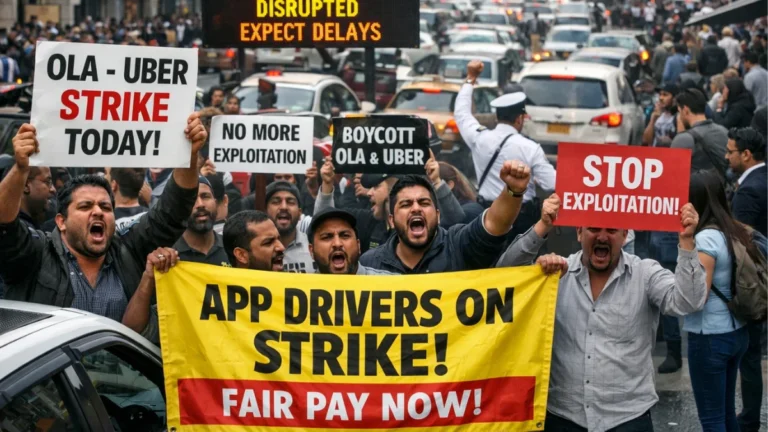
As the New Year approaches—a period traditionally marked by record-breaking online orders, festive shopping, and food deliveries—India’s gig economy is facing a critical disruption. Delivery partners associated with Swiggy, Zomato, and Amazon have begun coordinated strikes in multiple cities, demanding fair wages, transparency, and humane working conditions. The timing of the protests, just days before the year-end rush, has amplified their impact and drawn nationwide attention.
For millions of Indians, app-based delivery services have become an everyday necessity. From late-night food cravings to same-day e-commerce deliveries, platforms like Swiggy, Zomato, and Amazon have built their success on the backs of lakhs of delivery workers. However, behind the convenience and speed lies growing dissatisfaction among these workers, many of whom say their earnings have declined even as workloads have increased.
New Year- The strikes are not isolated incidents but part of a larger pattern of unrest within the gig economy. Over the past year, delivery partners have repeatedly raised concerns about falling per-order payments, unpredictable incentive structures, rising fuel costs, and mounting pressure to meet unrealistic delivery timelines. According to protesting workers, these issues have worsened during the festive season rather than improved.
What makes the current protests especially significant is their scale and coordination. Delivery partners across major metropolitan cities—including Bengaluru, Delhi-NCR, Mumbai, Hyderabad, Chennai, Pune, and Kolkata—have either gone on strike or threatened mass logouts from apps. Social media has played a crucial role in mobilizing workers, allowing them to share grievances and organize collective action.
As companies maintain that their compensation models are fair and performance-based, delivery workers argue that the reality on the ground tells a different story. With inflation rising and living costs soaring, many say their earnings are no longer sufficient to sustain basic livelihoods. The New Year strike has thus become a flashpoint in the ongoing debate about labor rights in India’s fast-growing gig economy.
Background: The Rise of India’s Gig Economy

India’s gig economy has grown rapidly over the last decade, driven by smartphone penetration, affordable data, and changing consumer behavior. Platforms like Swiggy, Zomato, and Amazon have positioned themselves as technology-driven marketplaces, connecting customers with restaurants, sellers, and delivery partners.
Delivery partners are officially categorized as “independent contractors,” not employees. This classification allows companies to avoid providing benefits such as minimum wages, paid leave, health insurance, or retirement support. While the model offers flexibility on paper, many workers say it leaves them vulnerable in practice.
Initially, gig work was seen as a lucrative opportunity, with high incentives and bonuses attracting thousands of workers. Over time, however, incentive structures were revised, base pay was reduced, and algorithm-driven performance metrics became stricter. Workers claim that what once allowed them to earn a decent living now barely covers daily expenses.
Why the Strikes Are Happening Now
1. Declining Per-Order Pay
One of the central grievances is the steady reduction in per-order payments. Delivery partners allege that base pay for each order has been cut over time, forcing them to rely heavily on incentives that are increasingly difficult to achieve.
Workers report that:
- Long-distance deliveries often pay nearly the same as short ones
- Waiting time at restaurants is unpaid
- Cancelled orders result in lost time and fuel with no compensation
As a result, the effective hourly earnings have dropped significantly.
2. Rising Fuel and Maintenance Costs
With petrol and diesel prices remaining high, delivery partners say their operating costs have surged. Most workers use their own two-wheelers, bearing expenses such as fuel, vehicle maintenance, insurance, and mobile data.
Despite these rising costs, workers claim that delivery platforms have not revised payouts accordingly. Many say they are now spending a large portion of their earnings just to keep working.
3. Unpredictable Incentive Systems
Incentives are a major component of delivery earnings, but workers argue that the rules change frequently and without transparency. Targets are often revised mid-week, and incentives may be withdrawn due to minor technical issues or order cancellations beyond the worker’s control.
Delivery partners say this uncertainty makes financial planning impossible and creates constant stress.
4. Algorithmic Pressure and Penalties
New Year- Workers also point to the increasing control exerted by algorithms. Late deliveries—often caused by traffic, restaurant delays, or weather—can result in penalties, lower ratings, or temporary account suspensions.
Many delivery partners feel they are punished unfairly by automated systems with no effective grievance redressal mechanism.
5. Lack of Social Security and Benefits
Despite working long hours, delivery partners do not receive:
- Health insurance
- Accident coverage adequate for their risk
- Paid leave or sick days
- Job security
In a profession involving road travel and physical risk, this lack of protection has become a major concern.
Why the New Year Timing Matters
The New Year period is one of the busiest times for food delivery and e-commerce platforms. Demand spikes due to celebrations, parties, and last-minute shopping. By striking during this high-demand window, delivery partners aim to maximize visibility and pressure on companies.
Workers say they have tried raising issues through internal channels in the past, with little success. The strike, they argue, is a last resort to force meaningful dialogue.
Impact on Customers and Businesses
The strikes have led to:
- Delayed food deliveries
- Limited restaurant availability on apps
- Slower e-commerce deliveries
- Higher surge fees in some areas
Restaurants and small sellers have also expressed concern, as they rely heavily on delivery platforms during peak seasons. Some fear revenue losses if disruptions continue.
Company Responses So Far
Swiggy, Zomato, and Amazon have stated that:
- Delivery partners earn competitively
- Incentive structures are designed to reward performance
- Flexibility remains a key advantage of gig work
However, they have also acknowledged the need for dialogue and, in some cases, initiated talks with worker representatives. Delivery partners say concrete changes, not assurances, are what matter.
The Bigger Picture: Gig Workers and Labor Rights
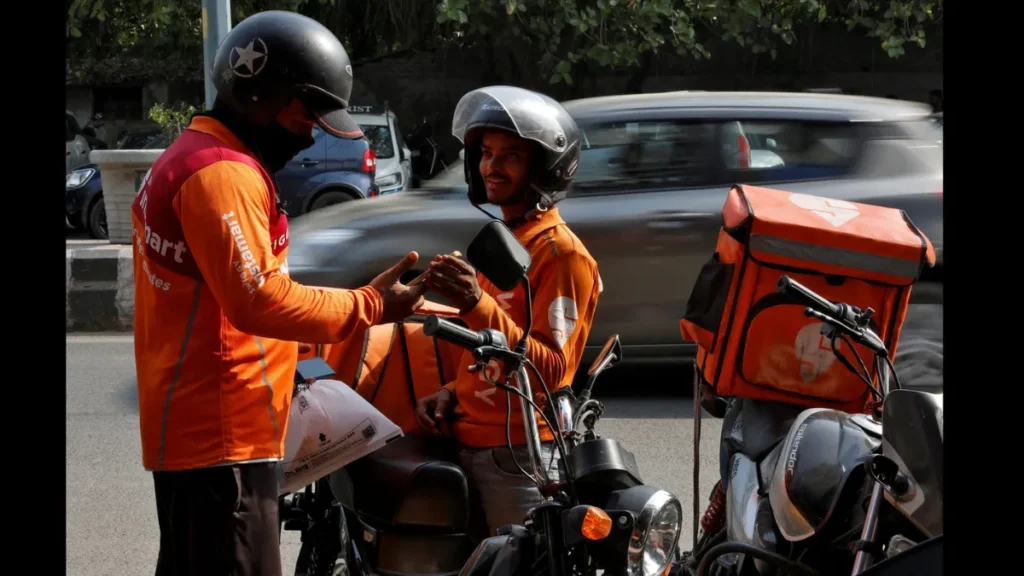
The strikes have reignited debates about whether gig workers should be granted employee-like protections. Policymakers and labor experts are increasingly questioning whether current laws adequately protect millions of gig workers.
Some states have proposed welfare boards and social security schemes for gig workers, but implementation remains uneven.
What Delivery Partners Are Demanding
Key demands include:
- Minimum base pay per order
- Fuel cost adjustments
- Transparent and stable incentive policies
- Accident insurance and health coverage
- Fair grievance redressal systems
Workers emphasize that they are not against technology or flexibility but want dignity and sustainability in their work.
Possible Outcomes of the Strike
If negotiations succeed, companies may revise payout structures or introduce limited benefits. If talks fail, workers warn of prolonged strikes or nationwide coordinated action.
The outcome could set a precedent for gig workers across sectors, including ride-hailing and logistics.
Also Read: Inside Germany’s Biggest Christmas Bank Robbery: €30 Million Disappears
Conclusion
The strikes by Swiggy, Zomato, and Amazon delivery partners before the New Year are more than just a labor dispute—they reflect deep structural issues within India’s gig economy. As platforms grow more powerful and profitable, delivery workers are demanding a fairer share of the value they help create.
With millions of livelihoods at stake, the coming days will be crucial. Whether companies and policymakers respond with meaningful reforms or temporary fixes may shape the future of gig work in India for years to come(New Year).
FAQs
Q1. Why are delivery partners striking before New Year?
To draw attention during a peak demand period and push for urgent reforms in pay and working conditions.
Q2. Which companies are affected?
Major platforms include Swiggy, Zomato, and Amazon.
Q3. What are the main demands of delivery partners?
Better base pay, fuel cost compensation, transparent incentives, and social security benefits.
Q4. Will customers face delays?
Yes, in cities where strikes are active, delays and limited availability are being reported.
Q5. Are delivery partners employees?
No, they are classified as independent contractors, which limits their legal protections.
Q6. Have similar strikes happened before?
Yes, smaller protests have occurred in the past, but this is among the most widespread.
Q7. Are companies negotiating with workers?
Some discussions have begun, but workers say outcomes remain unclear.
Q8. Could this lead to policy changes?
Possibly, as the issue has drawn attention to gig worker rights nationwide.
Q9. How long might the strike last?
That depends on negotiations; workers say they are prepared for prolonged action.
Q10. What does this mean for the gig economy?
It could mark a turning point toward greater regulation and worker protections.

I’m a professional news publisher and passionate blogger, sharing trending stories, breaking news, and digital culture from around the world.