








Introduction
Bangladesh is grappling with one of the most volatile periods in its modern political history. Just days after the assassination of Sharif Osman Hadi, a charismatic youth leader who played a pivotal role in the 2024 student-led protests, the nation has witnessed another alarming incident: the attempted killing of Muhammad Motaleb Sikdar, a senior student leader in Khulna. This latest attack has sent shockwaves across the country, reigniting fears of political violence, social unrest, and instability just months ahead of the scheduled February 2026 general elections.
The series of violent events has not only challenged the government’s capacity to maintain law and order but also raised critical questions about the safety of student activists, the resilience of civil society, and the broader trajectory of Bangladesh’s democracy. Public protests, political tension, and widespread media coverage have turned the spotlight on the urgent need for accountability, security, and political reform.
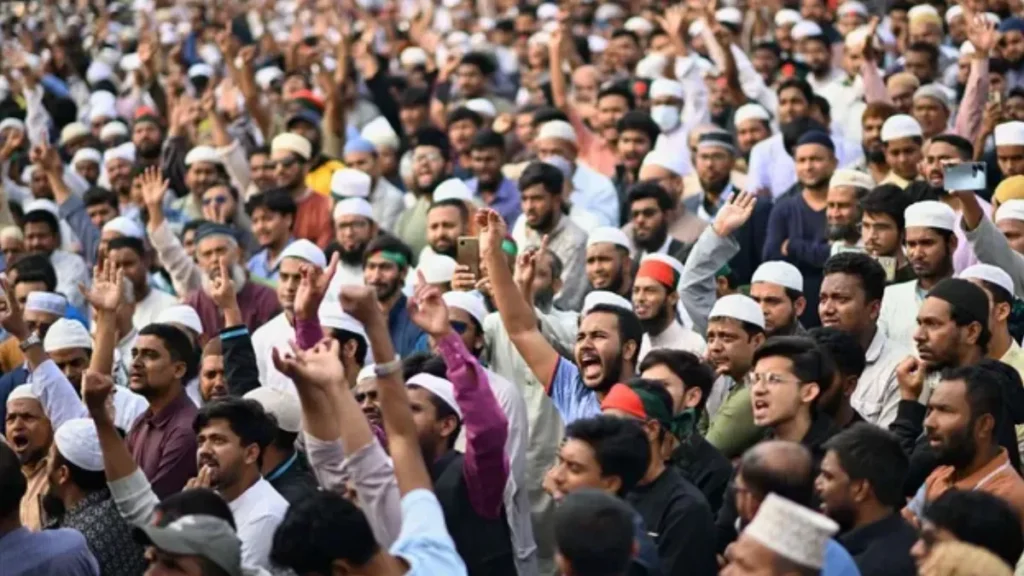
While Sharif Osman Hadi’s death sparked nationwide mourning and a surge of political activism, the attack on Motaleb Sikdar suggests a deliberate effort by unidentified actors to suppress youth leadership and destabilize the ongoing political transition. The implications of these events are profound, affecting not just political stakeholders but also ordinary citizens who are witnessing their nation teeter on the brink of unrest.
Background of Bangladesh’s Political Situation
Bangladesh’s political landscape has long been shaped by intense rivalry between major political parties, periodic student-led movements, and active youth participation in governance debates. Historically, student activism has served as both a catalyst for democratic change and a flashpoint for social unrest. From the Language Movement of 1952 to the protests of 1990 and the more recent 2024 uprising, students have consistently played a pivotal role in shaping national discourse.
The 2024 student-led movement, which brought Sharif Osman Hadi to national prominence, emerged from widespread dissatisfaction with governance, perceived corruption, and socio-economic disparities. University campuses became centers of activism, organizing mass demonstrations, awareness campaigns, and political mobilizations. Hadi, with his charisma and ability to connect with grassroots supporters, quickly became the face of the movement. His speeches emphasized justice, accountability, and democratic principles, making him both a symbol of hope and a target for political adversaries.
Motaleb Sikdar, another influential figure, was similarly known for mobilizing youth participation and advocating for student rights. Together, leaders like Hadi and Sikdar represented a new generation of politically conscious activists committed to shaping Bangladesh’s future through organized, peaceful, yet assertive civic action.
However, this prominence also made them vulnerable. Student leaders in Bangladesh have historically faced threats, intimidation, and targeted attacks, often from political opponents or clandestine actors seeking to maintain influence and suppress dissent. The deaths and attacks of prominent youth leaders are not isolated incidents but reflect deeper structural challenges in the nation’s political fabric.
The Assassination of Sharif Osman Hadi
On December 12, 2025, Sharif Osman Hadi was shot in Dhaka while attending a political rally. Reports indicate that masked gunmen fired directly at him as he was engaging with supporters. The attack was swift, calculated, and left little room for immediate intervention. Despite being rushed to advanced medical facilities, first in Dhaka and then abroad for specialized care, Hadi succumbed to his injuries last week.
The assassination sent shockwaves across Bangladesh. In the days following his death, tens of thousands of citizens participated in protests, demanding justice and accountability. Roads were blocked, government buildings were surrounded by demonstrators, and occasional clashes with law enforcement were reported. Social media platforms became flooded with tributes, calls for reform, and strong condemnation of the attack.
Hadi’s funeral was held under tight security, attended by government officials, military representatives, and thousands of citizens. The event symbolized both mourning and resistance, marking him as a martyr in the eyes of his followers and a cautionary figure for political opponents. The political vacuum created by his death intensified pressure on both the government and student organizations to maintain momentum and safeguard the rights of activists.
Attack on Muhammad Motaleb Sikdar
Just days after Hadi’s assassination, Muhammad Motaleb Sikdar was shot in the head in Khulna by unidentified gunmen. Sikdar, serving as the divisional chief of a major student organization, was critically injured and rushed to Khulna Medical College Hospital. While doctors have stabilized him, the attack underscores a disturbing trend of targeting influential youth leaders.
The timing of the attack, so soon after Hadi’s death, indicates a calculated strategy to intimidate activists and disrupt organized student movements. Many political analysts believe that such targeted violence is intended to create a climate of fear, reduce public mobilization, and discourage political participation among youth.
Local residents and fellow student leaders have expressed outrage, organizing impromptu rallies demanding the protection of student activists and the swift apprehension of those responsible. The attack has sparked renewed debate about law enforcement efficiency, intelligence monitoring, and the role of political actors in either condoning or failing to prevent such violence.
Impact on Student and Youth Leadership
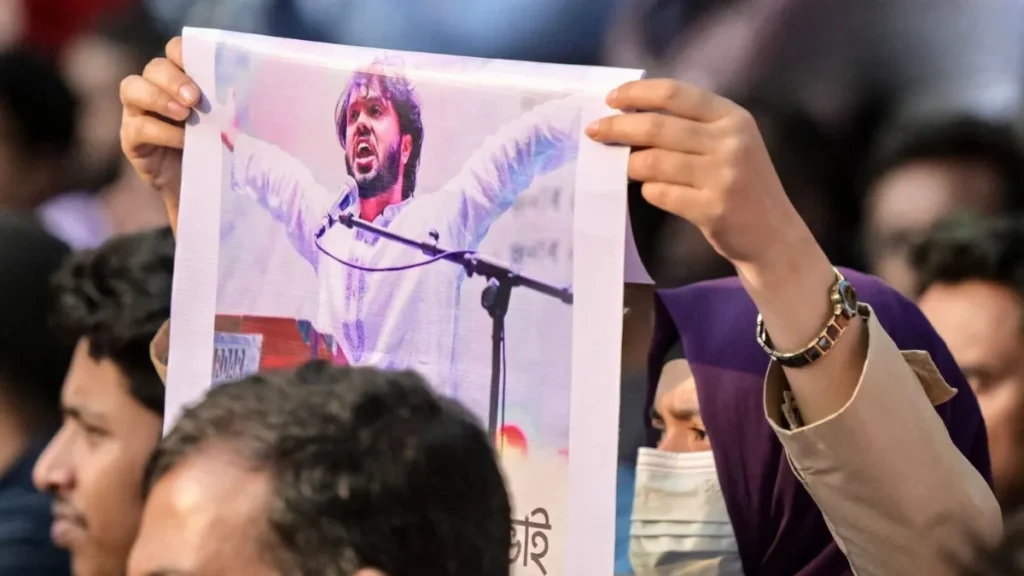
The targeting of student leaders like Hadi and Sikdar has profound implications for Bangladesh’s youth-driven political ecosystem. Student organizations, which serve as both political incubators and advocacy groups, now face increased vulnerability. Activists are being forced to reconsider public engagement, and some fear stepping into leadership roles due to safety concerns.
This climate of intimidation threatens to stifle civic activism, weaken institutional checks, and disrupt democratic participation. Historically, when youth leaders are silenced or attacked, societal mobilization slows, and entrenched political interests consolidate power. Analysts argue that without decisive action from authorities, Bangladesh risks undermining the very foundations of its youth-driven political engagement.
Political and Electoral Context
Bangladesh’s political tensions are intensified by the approaching February 2026 general elections. The interim government, tasked with ensuring a fair transition, faces scrutiny over its capacity to maintain law and order. Opposition groups and student organizations continue to mobilize, pressing for reforms, transparency, and justice for victims of political violence.
The attacks on Hadi and Sikdar are not merely acts of violence; they are strategic moves that could influence electoral dynamics. Analysts warn that continued targeting of youth leaders might suppress voter participation, distort political discourse, and create conditions that favor entrenched interests over emerging voices.
Election observers emphasize that securing the safety of political activists and ensuring transparency will be critical for maintaining public confidence in the democratic process. Failure to address these attacks effectively could have long-term implications for political stability, governance, and civic trust.
Government Response and Security Measures
Following the attacks, the government has increased police and military deployment across major urban centers, universities, and political hotspots. Security agencies have vowed comprehensive investigations, aiming to identify and apprehend the perpetrators.
Despite these measures, the challenge remains significant. Public trust in law enforcement has been tested, and ongoing protests indicate that citizens expect more than statements of condemnation—they demand accountability, swift justice, and structural reforms to prevent future incidents.
Analysts note that addressing the root causes of political violence—such as polarized political environments, lack of accountability, and ineffective intelligence—will be essential for long-term stability.
Societal Impact and Public Sentiment
The violence against student leaders has had a wide-ranging impact on society. Urban centers, particularly Dhaka and Khulna, have experienced intermittent protests, road blockades, and clashes with law enforcement. Citizens are anxious, particularly young people who are actively engaged in political movements or civil society work.
Civil society groups have condemned the attacks, emphasizing that targeted violence against youth activists undermines both democracy and social cohesion. Parents, educators, and community leaders are increasingly concerned about the safety of students and the potential chilling effect on public participation.
The social fabric is under strain, with ordinary citizens caught between the need for stability and the desire for justice and accountability.
Geopolitical Implications
Bangladesh’s internal unrest carries regional and international significance. Neighboring countries and global observers are closely monitoring developments, concerned about the impact on regional stability, trade, and diplomatic relations.
The attacks on youth leaders, combined with widespread public protests, have the potential to affect Bangladesh’s image internationally. Observers argue that the country must demonstrate its commitment to democratic principles, rule of law, and protection of civic rights to maintain credibility on the global stage.
Also Read: India–New Zealand Announce Landmark Free Trade Deal; PM Modi Holds Talks with Luxon
Conclusion
The assassination of Sharif Osman Hadi and the subsequent attack on Muhammad Motaleb Sikdar represent a critical juncture in Bangladesh’s political journey. These incidents underscore the fragility of civic engagement, the vulnerability of student leadership, and the broader challenges facing democracy in the country.
The path forward requires decisive action: effective law enforcement, transparent investigations, protection of youth activists, and efforts to depoliticize violence. Public trust, democratic integrity, and social cohesion depend on the nation’s ability to respond effectively. As Bangladesh approaches its 2026 elections, the choices made by authorities, political actors, and civil society will determine whether the nation stabilizes and progresses or continues down a path of unrest and insecurity.
FAQs
1. Who was Sharif Osman Hadi?
Sharif Osman Hadi was a prominent youth and student leader in Bangladesh, central to the 2024 student-led protests. He was assassinated on December 12, 2025.
2. Who is Muhammad Motaleb Sikdar?
Muhammad Motaleb Sikdar is a senior student leader in Khulna, divisional chief of a major student organization, who was critically injured in an attack days after Hadi’s assassination.
3. Why are student leaders being targeted?
Student leaders are often at the forefront of political activism. These attacks are likely intended to intimidate youth activists, disrupt organized movements, and suppress democratic participation.
4. How has the government responded?
The government has increased police deployment, vowed thorough investigations, and pledged to apprehend the perpetrators of both attacks.
5. How do these attacks affect the upcoming elections?
Targeting youth leaders can undermine public confidence, reduce voter participation, and distort political discourse, potentially impacting the integrity of the 2026 elections.

I’m a professional news publisher and passionate blogger, sharing trending stories, breaking news, and digital culture from around the world.