









Introduction
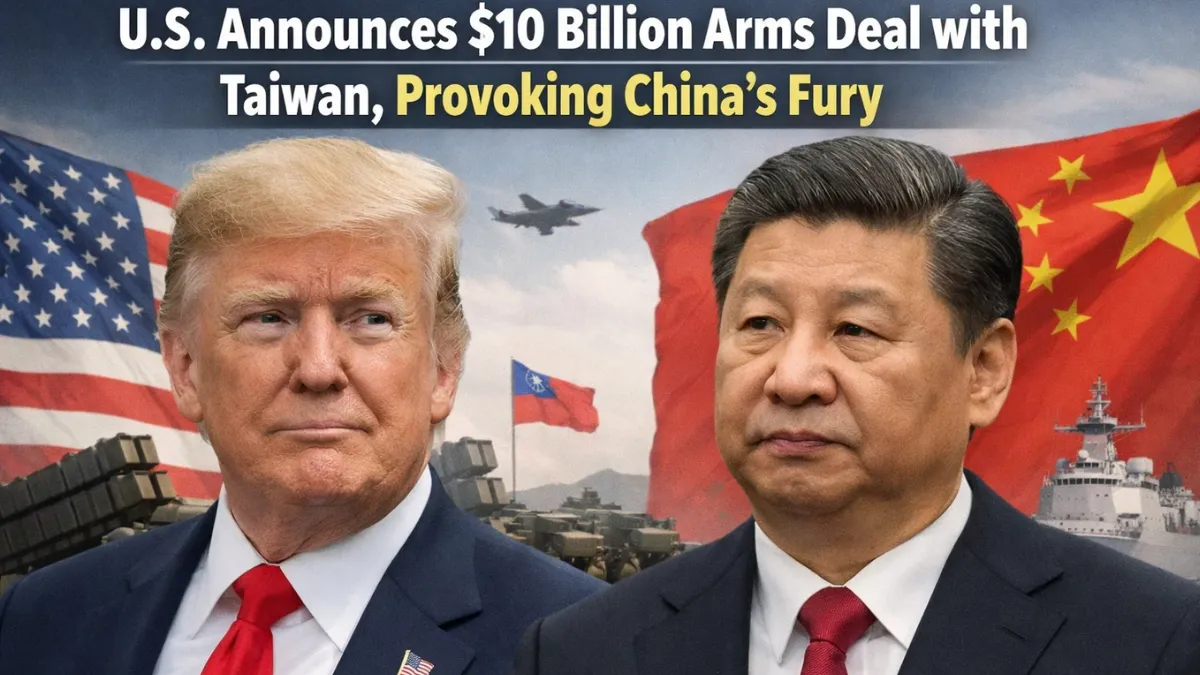
In a major development that has sent ripples across the Indo-Pacific region, the United States has announced a $10 billion arms deal with Taiwan. The agreement, aimed at bolstering Taiwan’s defense capabilities, has drawn sharp criticism from Beijing, which views such actions as a direct challenge to its sovereignty claims over Taiwan. The deal, which includes advanced missile systems, fighter jets, and surveillance equipment, is part of the United States’ broader strategy to counter China’s growing influence in the region and strengthen security ties with key allies.
US officials argue that the deal is in line with the Taiwan Relations Act, under which the United States is committed to providing Taiwan with the means to defend itself. However, China has condemned the announcement, warning of serious consequences and labeling the arms sale as a violation of international norms and an infringement on Chinese sovereignty. Analysts believe this development could escalate tensions in the region and impact global trade, technology transfers, and military strategy.

The arms deal comes at a time when geopolitical competition between the US and China is intensifying, particularly over Taiwan, a critical hub in the global semiconductor supply chain. With both nations seeking to assert their strategic interests, this announcement has significant implications for regional stability, defense posturing, and the international rules-based order.
Details of the $10 Billion Arms Deal
Advanced Weaponry and Systems
The US-Taiwan arms agreement includes a comprehensive array of defense equipment designed to enhance Taiwan’s deterrence and defense capabilities. The key components of the deal are:
- Fighter Jets: High-performance multi-role fighter jets equipped with advanced avionics and radar systems.
- Missile Defense Systems: Surface-to-air and anti-ship missile systems capable of intercepting potential threats.
- Surveillance and Reconnaissance Equipment: Cutting-edge radar and intelligence-gathering systems to strengthen situational awareness.
- Naval Systems: Upgrades to Taiwan’s existing naval fleet including patrol boats and missile-launch capabilities.
- Training and Support Services: Extensive military training programs and logistical support to ensure operational readiness.
Strategic Objectives
The arms deal is aimed at enabling Taiwan to maintain credible self-defense capabilities amid rising threats from China. The US sees Taiwan as a key partner in maintaining balance in the Indo-Pacific, ensuring freedom of navigation, and safeguarding critical trade routes. By enhancing Taiwan’s defense infrastructure, the United States aims to deter aggression, reinforce alliances, and project strength in the region.
China’s Response and Regional Implications
Beijing’s Strong Condemnation
China has reacted strongly to the US-Taiwan arms deal, issuing a formal statement through its Ministry of Foreign Affairs. Key points of Beijing’s response include:
- Violation of Sovereignty: China views the deal as an infringement on its territorial claims over Taiwan.
- Threat to Peace: The arms sale is seen as escalating tensions in the Taiwan Strait and destabilizing regional security.
- Warning of Countermeasures: China has indicated potential diplomatic, economic, and military responses if such sales continue.
Regional Security Concerns
Experts warn that the arms deal could trigger an arms race in the region. Neighboring countries, including Japan and South Korea, are closely monitoring the situation. The deal may also influence US defense posture in East Asia, including increased naval presence and joint military exercises with allies.
US Justification and Policy Rationale

Commitment Under the Taiwan Relations Act
US officials emphasize that the deal is consistent with the Taiwan Relations Act, which mandates providing Taiwan with defensive weapons to maintain self-sufficiency against potential threats. The Act is designed to ensure peace and stability in the Taiwan Strait.
Strategic Containment of China
The arms sale reflects the broader US strategy of countering China’s growing military and economic influence. By strengthening Taiwan’s defense, the United States aims to preserve balance, secure regional allies, and maintain freedom of navigation in critical maritime corridors.
Deterrence and Military Readiness
Defense experts argue that the deal enhances deterrence by signaling to China that any aggressive actions against Taiwan would be met with significant resistance. The sale also improves Taiwan’s operational readiness, ensuring that the island can respond effectively to potential threats.
Impact on US-China Relations
Escalating Tensions
The announcement of the arms deal is likely to strain US-China relations further. Diplomatic exchanges, trade negotiations, and military engagements could be affected. Analysts caution that Beijing may adopt a more assertive stance in regional disputes or increase military drills near Taiwan.
Potential Economic Ramifications
Tensions surrounding Taiwan could influence global trade, particularly in semiconductors and technology exports. Companies dependent on cross-strait supply chains may face disruptions, affecting global markets and investor confidence.
Diplomatic and Military Signaling
Both the US and China are expected to increase their diplomatic and military signaling to assert their positions. This could include joint exercises with allies, arms demonstrations, or high-level diplomatic visits to shore up regional support.
Taiwan’s Position and Strategic Calculus
Strengthening Defense Capabilities
Taiwan welcomes the arms deal as a necessary step to enhance its defensive capabilities. Taiwanese officials highlight that advanced weaponry and training are critical to maintaining a credible deterrent and ensuring the island’s security.
Boosting Confidence Among Citizens
The deal also serves as a psychological boost for Taiwan’s population, reinforcing the message that the island is not alone and has international support in the face of external threats.
Maintaining International Partnerships
Taiwan views the deal as part of its broader strategy to strengthen international ties, gain political support, and ensure the continuity of trade and investment relationships.
Regional and Global Reactions
Japan and South Korea
Regional allies have closely monitored the deal. Japan emphasizes the importance of maintaining peace in the Taiwan Strait, while South Korea highlights stability as crucial for regional economic security. Both nations are expected to coordinate closely with the US on defense strategies.
European Perspective
European nations have largely expressed concern over escalating tensions but support the principle of Taiwan’s self-defense rights. The European Union calls for dialogue and peaceful resolution.
ASEAN Countries
Southeast Asian nations are wary of potential disruptions in trade and maritime security. ASEAN has encouraged restraint and dialogue between all parties.

Military and Strategic Analysis
Enhancing Taiwan’s Deterrence
Military analysts argue that the advanced systems included in the deal significantly enhance Taiwan’s deterrence posture. Multi-layered defense systems improve the island’s ability to detect, intercept, and neutralize potential threats.
US Force Projection
The deal signals US commitment to the Indo-Pacific and strengthens its ability to project force and influence regional security dynamics. Forward-deployed assets and intelligence sharing further support deterrence.
Risk of Escalation
While the arms sale improves defensive capability, experts warn it could provoke reactive measures by China, increasing the risk of miscalculations or regional incidents that could escalate into broader conflict.
Historical Context and Precedents
US-Taiwan Arms Sales
The US has a long history of arms sales to Taiwan, dating back to the Taiwan Relations Act of 1979. Previous deals have included fighter jets, missile systems, and naval assets. Each sale has historically drawn protests from Beijing.
Patterns in China’s Response
China has consistently condemned US arms sales to Taiwan, issuing formal warnings, conducting military drills, and occasionally imposing sanctions or trade measures.
Evolving Geopolitical Landscape
The current deal reflects heightened geopolitical competition, with China’s growing military and economic power prompting the US to strengthen alliances and support partners in the region.
Conclusion: Balancing Defense, Diplomacy, and Deterrence
The US $10 billion arms deal with Taiwan represents a significant milestone in regional security dynamics, highlighting the intensifying competition between Washington and Beijing. While the deal strengthens Taiwan’s defense capabilities and underscores US commitment to regional stability, it also risks escalating tensions and complicating diplomatic relations.
As both nations navigate the delicate balance between deterrence and diplomacy, the global community remains watchful. The coming months will be critical in shaping the strategic environment in the Indo-Pacific, determining whether arms sales and military posturing can coexist with dialogue and stability.
The announcement serves as a reminder that the Taiwan issue remains a flashpoint with far-reaching implications for military strategy, international law, global trade, and the broader balance of power in Asia.
FAQs)
1. What is the US $10 billion arms deal with Taiwan?
The deal is a major defense agreement in which the United States will supply Taiwan with advanced military equipment, including fighter jets, missile defense systems, surveillance technology, naval upgrades, and training support to strengthen Taiwan’s self-defense capabilities.
2. Why has the US approved such a large arms sale to Taiwan?
The United States says the deal is consistent with the Taiwan Relations Act, which commits Washington to helping Taiwan maintain sufficient defensive capability and to preserve peace and stability in the Taiwan Strait.
3. Why is China angry about the US-Taiwan arms deal?
China considers Taiwan part of its territory and strongly opposes any foreign military support to the island. Beijing views the arms deal as a violation of its sovereignty and a threat to regional stability.
4. How has China responded to the announcement?
China has issued strong diplomatic protests, warned of countermeasures, and accused the US of interfering in its internal affairs. Analysts expect increased military drills and diplomatic pressure in response.
5. What weapons are included in the arms package?
The package includes advanced fighter aircraft, surface-to-air and anti-ship missile systems, radar and surveillance platforms, naval combat upgrades, and long-term training and logistical support.
6. How does this deal affect US-China relations?
The deal is likely to further strain already tense US-China relations, potentially impacting diplomacy, trade talks, military engagement, and cooperation on global issues.
7. How important is Taiwan strategically?
Taiwan is strategically vital due to its location in the Indo-Pacific and its central role in the global semiconductor supply chain, making its security a major international concern.

I’m a professional news publisher and passionate blogger, sharing trending stories, breaking news, and digital culture from around the world.